
When designing a Tiny House, one of the first and most important questions is: where do you want to sleep? The choice of sleeping arrangements forms the foundation of the design and construction of your Tiny House.
Some people think a Tiny House isn’t for them because they prefer to sleep on the ground floor and don’t want to use a staircase or ladder—perhaps due to age or simply because a sleeping loft doesn’t appeal to them. Fortunately, there are plenty of options for sleeping spaces in a Tiny House. Below, we list some possibilities:
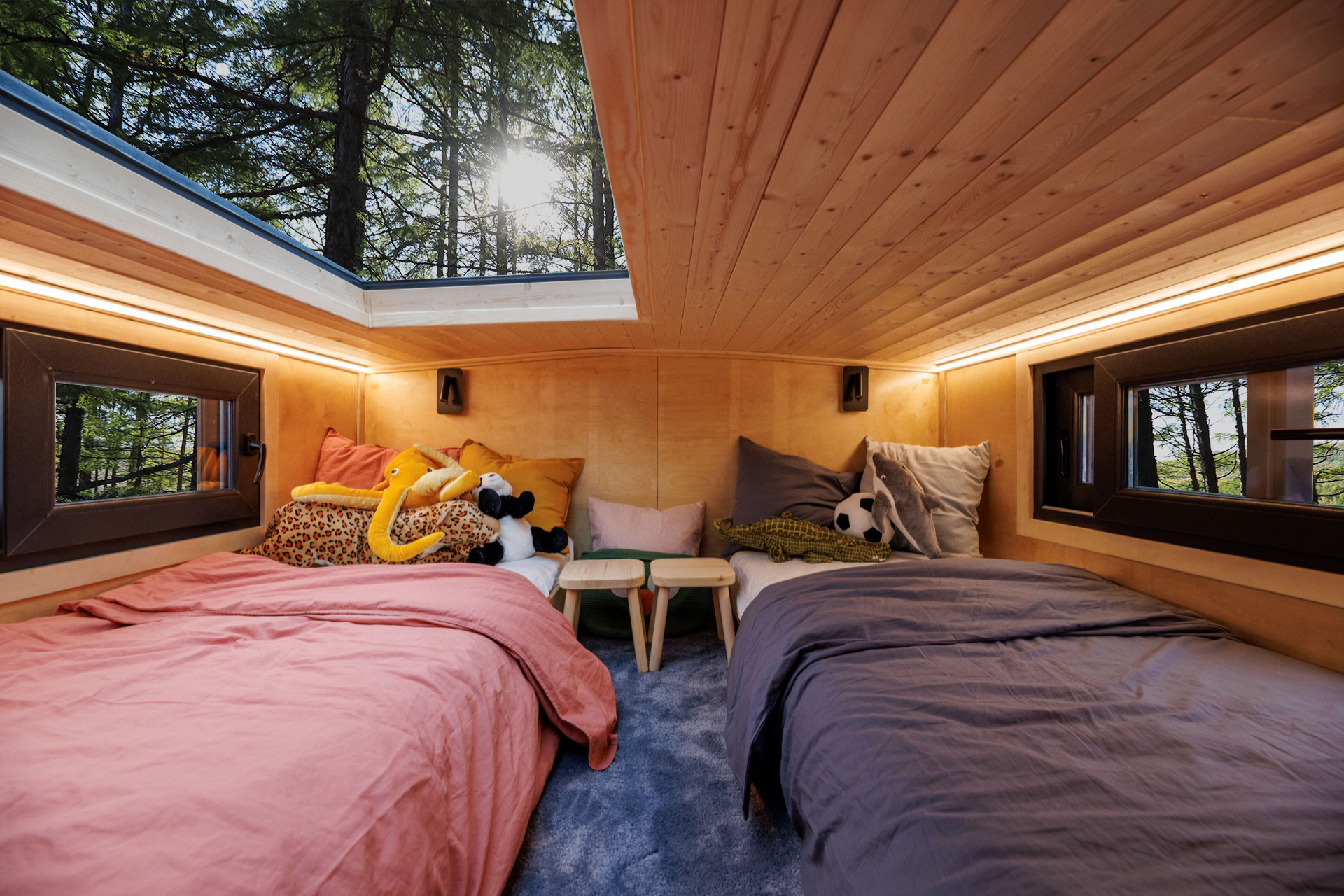
Sleeping loft
One of the most common sleeping solutions in a Tiny House is the sleeping loft. This elevated sleeping area is usually located above the kitchen or bathroom and is accessible via a ladder or fixed staircase. The biggest advantage of a sleeping loft is that it maximizes the available floor space, leaving more living space below. However, it may be less suitable for those who have difficulty climbing or prefer a fully enclosed bedroom.
Split-level
A split-level design creates a half-height level in the Tiny House, allowing for a sleeping area on the ground floor. The space above can be used as a living room or workspace, accessible via a short staircase. Since the sleeping area is on the lower level, it stays pleasantly cool, unlike a loft bed where rising heat tends to accumulate.

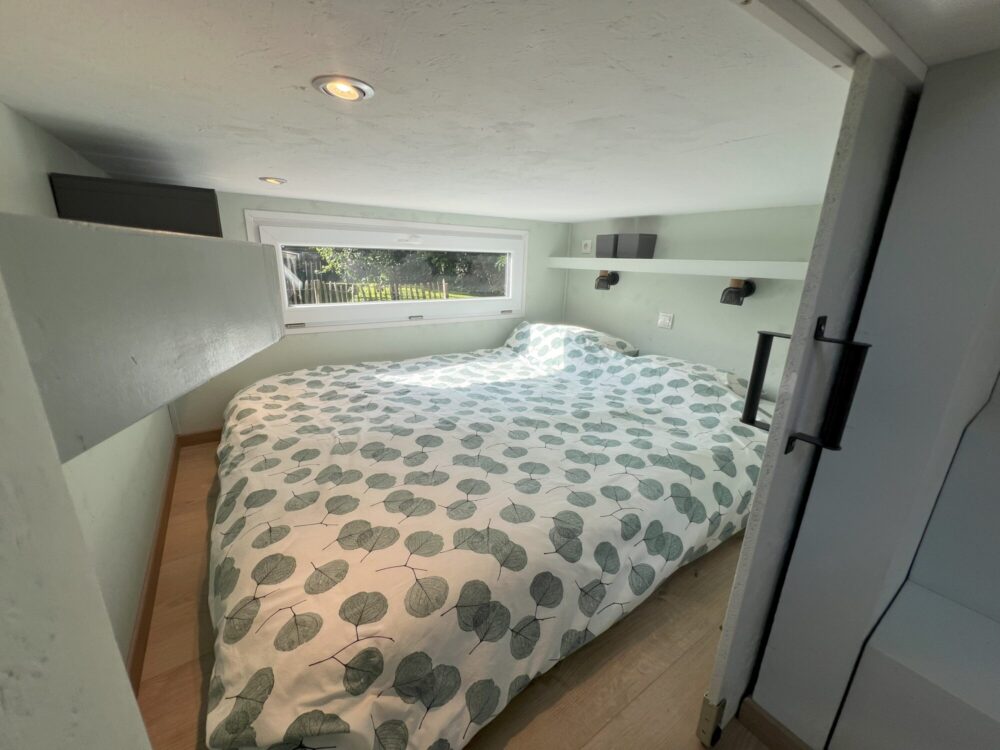

Murphy Bed (fold-away bed)
A Murphy bed, or fold-away bed, is a smart solution where the bed can be folded vertically against the wall when not in use. This saves a lot of space, allowing you to use the area for other purposes during the day—such as a living or workspace—and convert it into a bedroom at night. There are also multifunctional Murphy beds that double as a desk or dining table when folded.
Sofa Bed
A sofa bed is the ultimate example of multifunctional furniture. During the day, you can relax and lounge, and at night, you simply unfold it to transform the living room into a bedroom. This is an ideal solution for those who want flexibility in their space usage and don’t need a separate bedroom. Some sofa beds also come with built-in storage, making them perfect for use in a Tiny House.
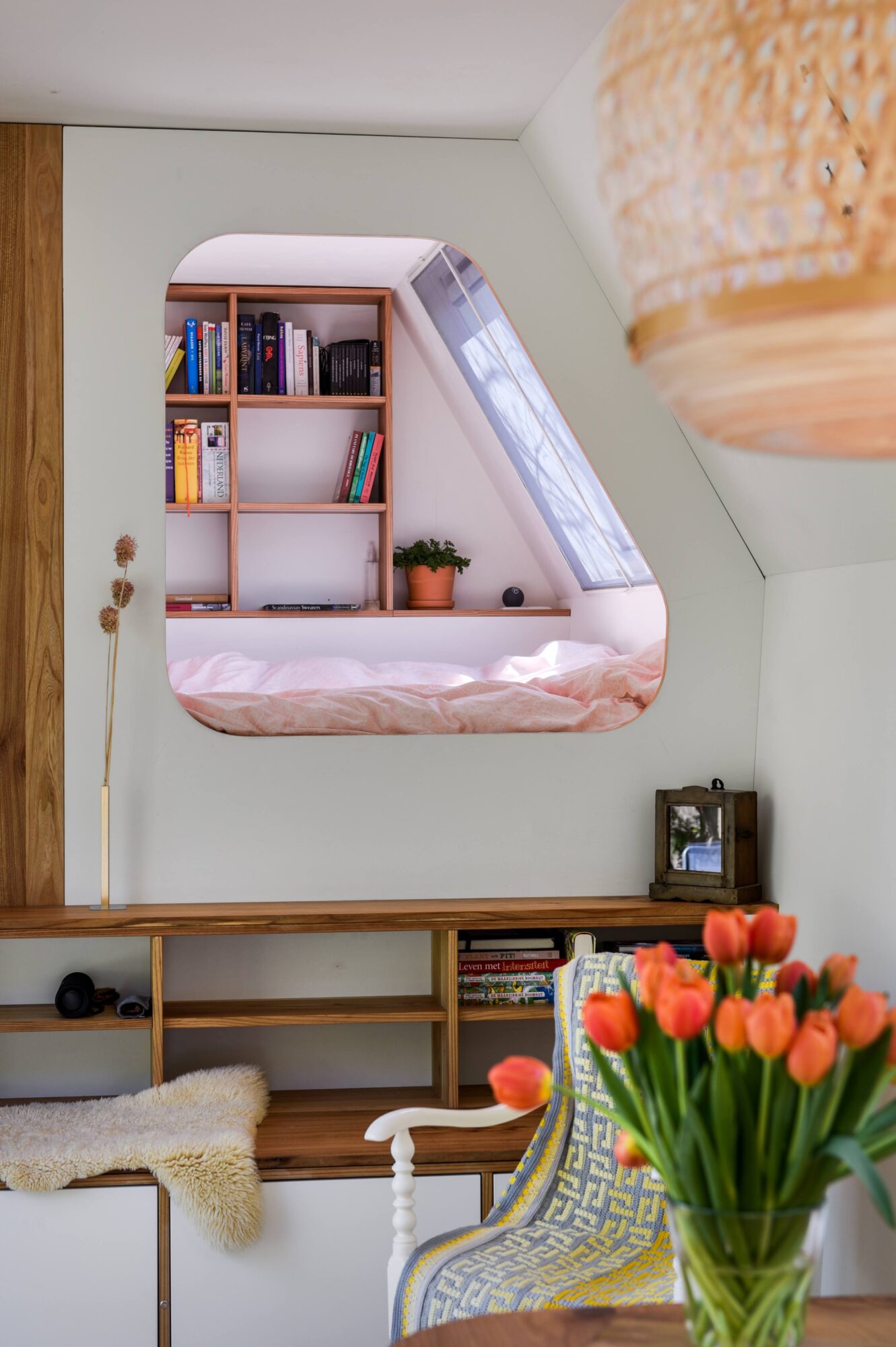
Box bed
A box bed allows you to sleep on the ground floor without taking up too much space—less than a separate downstairs bedroom would. It offers a cozy sleeping nook and can provide plenty of storage with pull-out drawers underneath and cabinets along the wall. You can choose to close the box bed with doors or leave it open.
Pull-Out Bed
A pull-out or trundle bed consists of a low bed that slides under a raised floor when not in use. Similar to a Murphy bed, this allows the space to be used for other functions during the day.
Ceiling-Hoisted Bed
A ceiling-hoisted bed is an innovative design where the bed is attached to the ceiling with pulleys and can be lowered when it’s time to sleep. During the day, the bed is lifted up, freeing up floor space for other activities.

Separate ground-floor bedroom
For those who prefer a traditional bedroom on the ground floor, a separate bedroom can be designed. In slightly larger Tiny Houses, this is entirely possible. One advantage is that you can walk around the bed, making it easier to make. Some Tiny House designs even include a sleeping loft above the bedroom for guests.
Key considerations when choosing your sleeping space
When deciding on the best sleeping solution for your Tiny House, keep the following factors in mind:
- Accessibility: Consider how easy it is to access the bed and make it, both now and in the future if mobility becomes an issue.
- Space efficiency: Think about how the chosen sleeping solution impacts the rest of the available space and whether it can serve multiple functions.
- Privacy: Determine whether you prefer a separate sleeping area for added privacy, especially if you share the Tiny House with others.
- Ventilation and light: Ensure the sleeping space has adequate ventilation and natural light for a healthy and comfortable sleeping environment.
- Emergency exit: Make sure you can exit the sleeping area in case of an emergency—this is also a requirement under the Building Decree for Living Environments.

Final thoughts
Designing a sleeping space in a Tiny House is different for everyone, depending on personal preferences and available space. Whether you choose a traditional sleeping loft, a multifunctional sofa bed, or an innovative hoisted bed, it’s important to select a design that fits your lifestyle.
Tip: Visit open house days at Tiny House communities to see how others have arranged their sleeping spaces. You can find these events in the TinyFindy agenda.
All images in this article come from the listings on TinyFindy.

Leave a Reply