
You can feel it: nature is slowly winding down. Leaves are falling from the trees, and many perennials are dying back above ground to rest beneath the soil. There’s not much left to do in the garden, but a few small jobs are perfect for a sunny autumn afternoon.
For many Tiny House residents, the garden is just as important as the house itself — so we take good care of it in every season!

Tidying lawn edges
If you have a bit of lawn in your garden, you’ll know that grass loves to spread. Without a border between your lawn and plant beds, you’ll need to trim the edges at least twice a year. You can do this with a sharp-bladed spade or an edging tool.
Another option is to create a barrier between the grass and the border, using bricks, sleepers, or ready-made edging made of wood or stone. A beautiful, quick, and movable solution is a corten steel garden edge. Available in different heights, these are easy to place in the ground. If your Tiny House is on a temporary plot, this is especially practical — you can take them with you when you move. You’ll find corten steel edging at specialised garden suppliers.
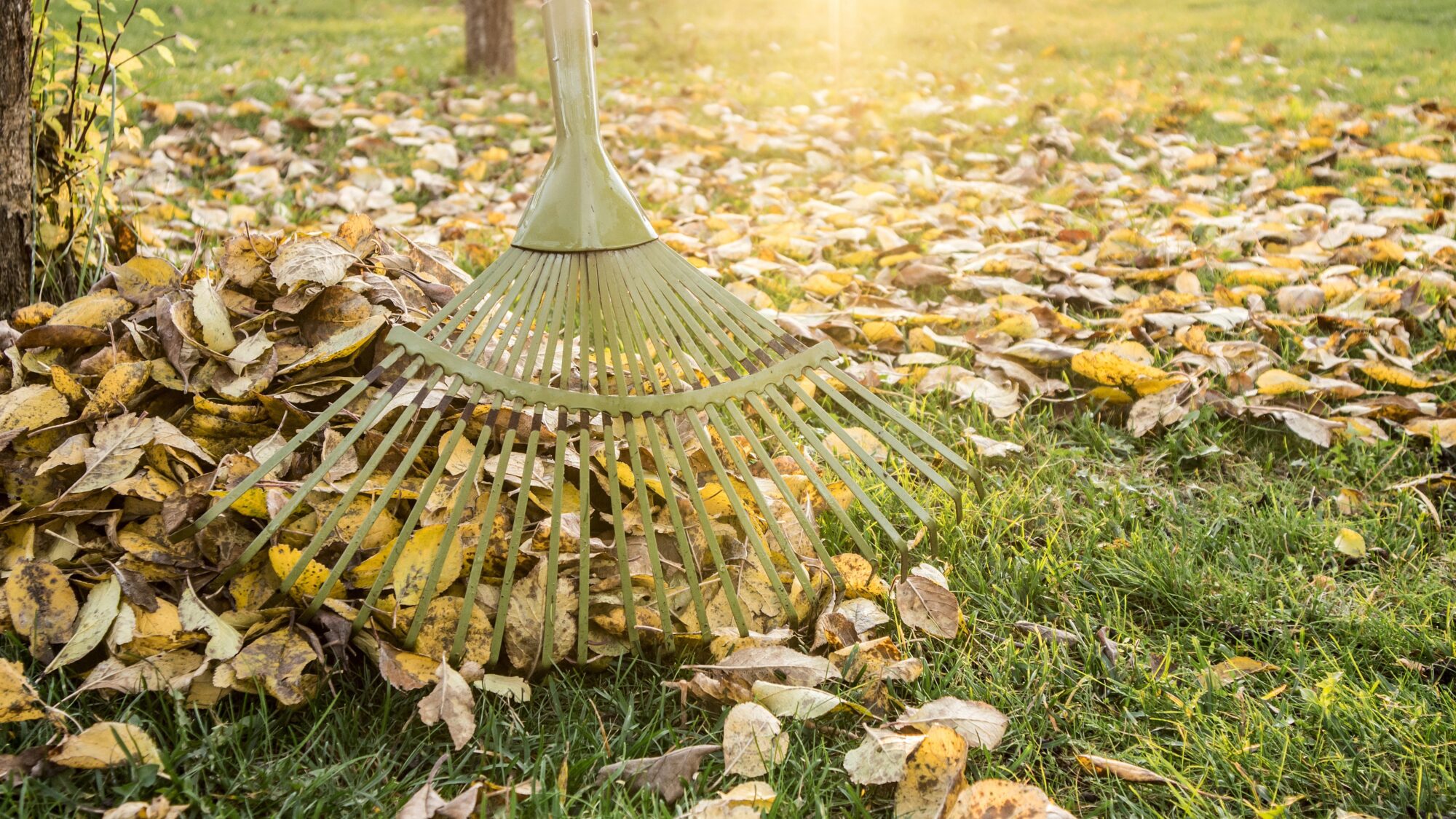
Mulching with Fallen Leaves
Right now, the ground is covered with fallen leaves — and while you may not want them on your lawn, they’re perfect for your plant beds! Fallen leaves make a fantastic mulch layer, feeding the soil and protecting plants and beneficial insects. So don’t throw them away — spread them between your plants instead. You’ll nourish the soil life and prevent weeds from taking over.
Storing Garden Furniture and Tools
If you have a shed, it’s a good idea to store your garden chairs and table there for the winter — it helps them last longer. No storage space? A protective cover will do the trick too. You probably won’t need your watering cans and hose for a while, so empty them and store them away. This is also a good time to check your garden tools: clean, oil, and sharpen them. That way, you’ll be ready for spring with sharp and well-kept equipment.

Protecting Plants in Pots
Plants in pots are more vulnerable to frost. Group them together in a sheltered spot, such as against a wall or inside a cold frame. Dahlias should be overwintered frost-free: dig up the tubers, remove the soil, let them dry, and store them in a cool, dry place. Annuals that are past their prime can go on the compost heap, and winter is the perfect time to clean your pots to prevent fungal diseases in the next season.
Autumn Pruning
Autumn is a good time to trim hedges, and you can also prune apple and pear trees one last time. Be careful not to prune during frost — wait for a few frost-free, dry days. Leave the dead stems of perennials standing; they provide shelter for many beneficial insects and larvae. Spring-flowering shrubs are best pruned after they bloom, not now — otherwise, you might cut off next year’s flower buds.
Autumn is the season of letting go — in the garden, too.
With just a few small tasks, you’ll give your Tiny garden rest and protection for the winter, while preparing it for a healthy, blooming spring. So put on a warm sweater, grab a cup of tea, and enjoy being outdoors — it’s the perfect time to be thankful for everything that grows and thrives.
The images in this article are partly from depositphotos.com and partly AI-generated, carefully curated to capture the Tiny House atmosphere.

Leave a Reply