
On a hot summer’s day, you can put up a parasol. But you can also grow one! A tree not only provides shade, but also cools its surroundings by releasing water vapour through its leaves. That is why sitting beneath a tree often feels more pleasant than sitting beneath a fabric canopy or roof.
There is just one problem: in a small garden, you do not want to plant a giant that will take over half the plot within ten years. If you want to buy a tree, do not just look at how big it is now. Pay particular attention to its eventual height and canopy spread, as well as its growth rate and how well it tolerates pruning.
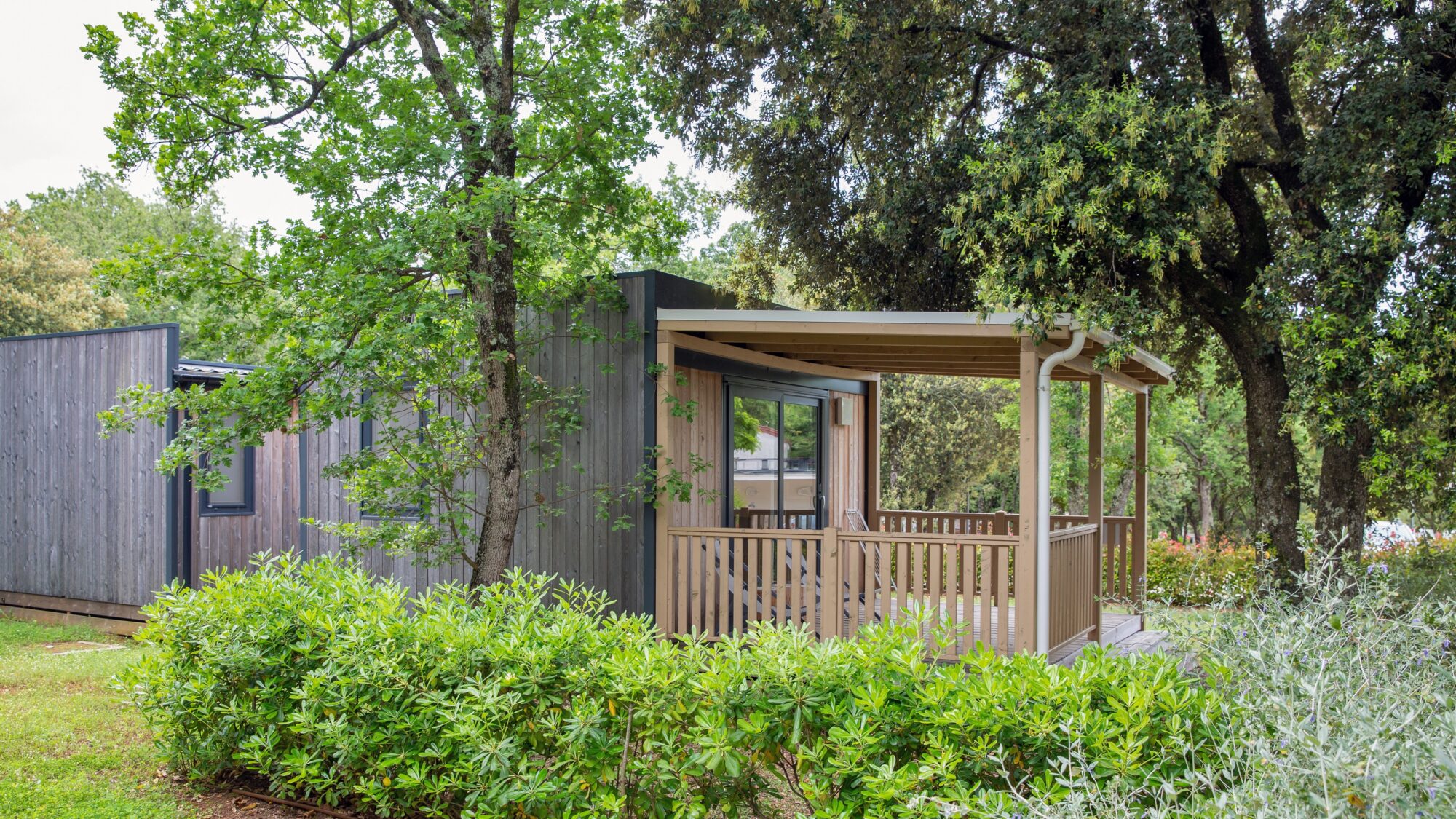
A tree as a living parasol
A roof-trained tree is ideal for growing above a patio or seating area. Its branches are trained horizontally to create a leafy green canopy. A roof-trained mulberry is a lovely choice: its large leaves provide plenty of shade and it responds well to pruning. Fruitless varieties are also available, so you will not end up with ripe mulberries all over your patio.
The roof-trained plane tree is another popular option, although it is a vigorous grower. In a very small garden, it will therefore need frequent pruning.
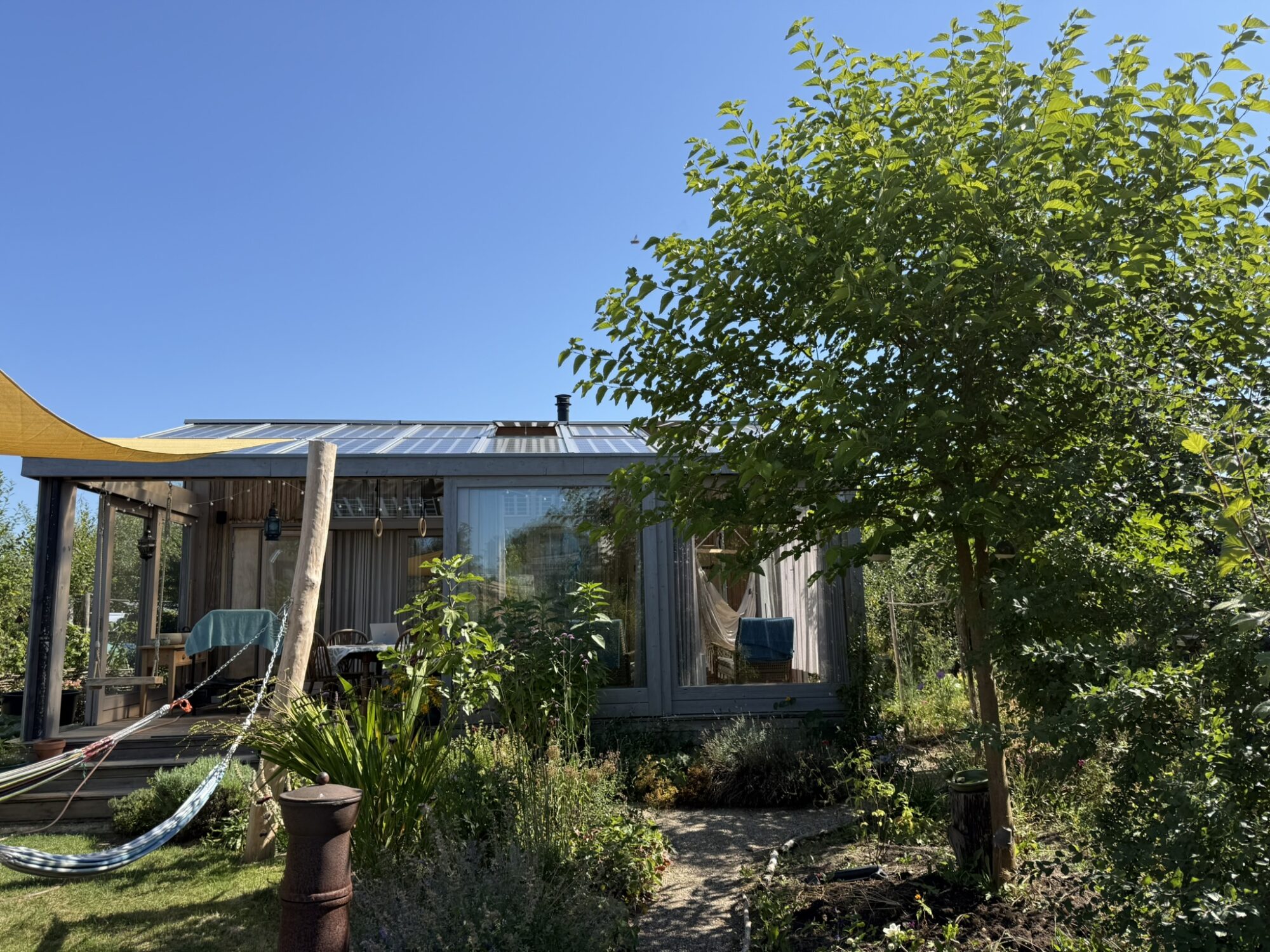
Shade and something tasty
Why settle for a tree with only one purpose? An apple or pear tree provides blossom, fruit and shade. Pay close attention to the rootstock, as this largely determines the tree’s eventual size. A half-standard tree can create a lovely leafy canopy above a bench, while an espalier or dwarf tree is a better choice when space is particularly limited.
A serviceberry is another interesting option. Although it originates from North America, it has been established in the Netherlands for a long time. It is a hardy plant that requires little care and produces an abundance of flowers in spring, providing food for insects. These are followed by edible berries, which birds love too. In autumn, its leaves turn beautiful colours. You can grow a serviceberry as a small tree or a multi-stemmed shrub, making it suitable for even a modest garden.
A hazel produces nuts and a dense canopy of leaves, but it does need some space. It will also require regular pruning if you want to keep it compact.
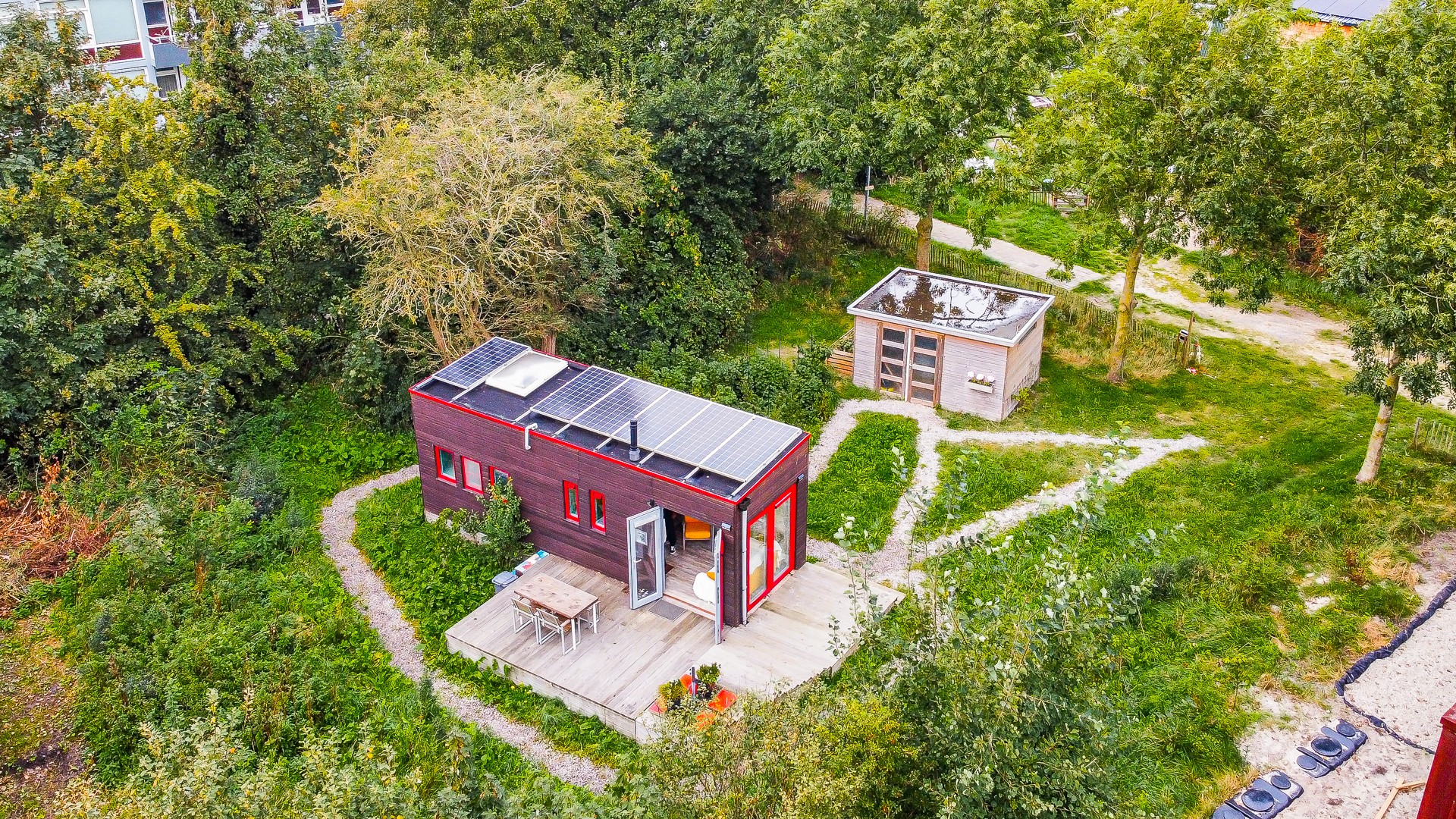
What about your solar panels?
A deciduous tree may seem like the ideal neighbour for solar panels: shade in the garden during summer and no leaves to block the sunlight in winter. Unfortunately, it is not quite that simple. Bare branches still cast shadows, and because the winter sun sits low in the sky, those shadows can reach surprisingly far. Too much shade on solar panels can significantly reduce their energy output.
Before planting, observe how the sun moves across your plot throughout the different seasons. A tree on the north side of the house is generally less likely to shade the roof than one planted on the south side. Remember to consider the tree’s eventual height and canopy spread, rather than looking only at the young sapling you are planting.
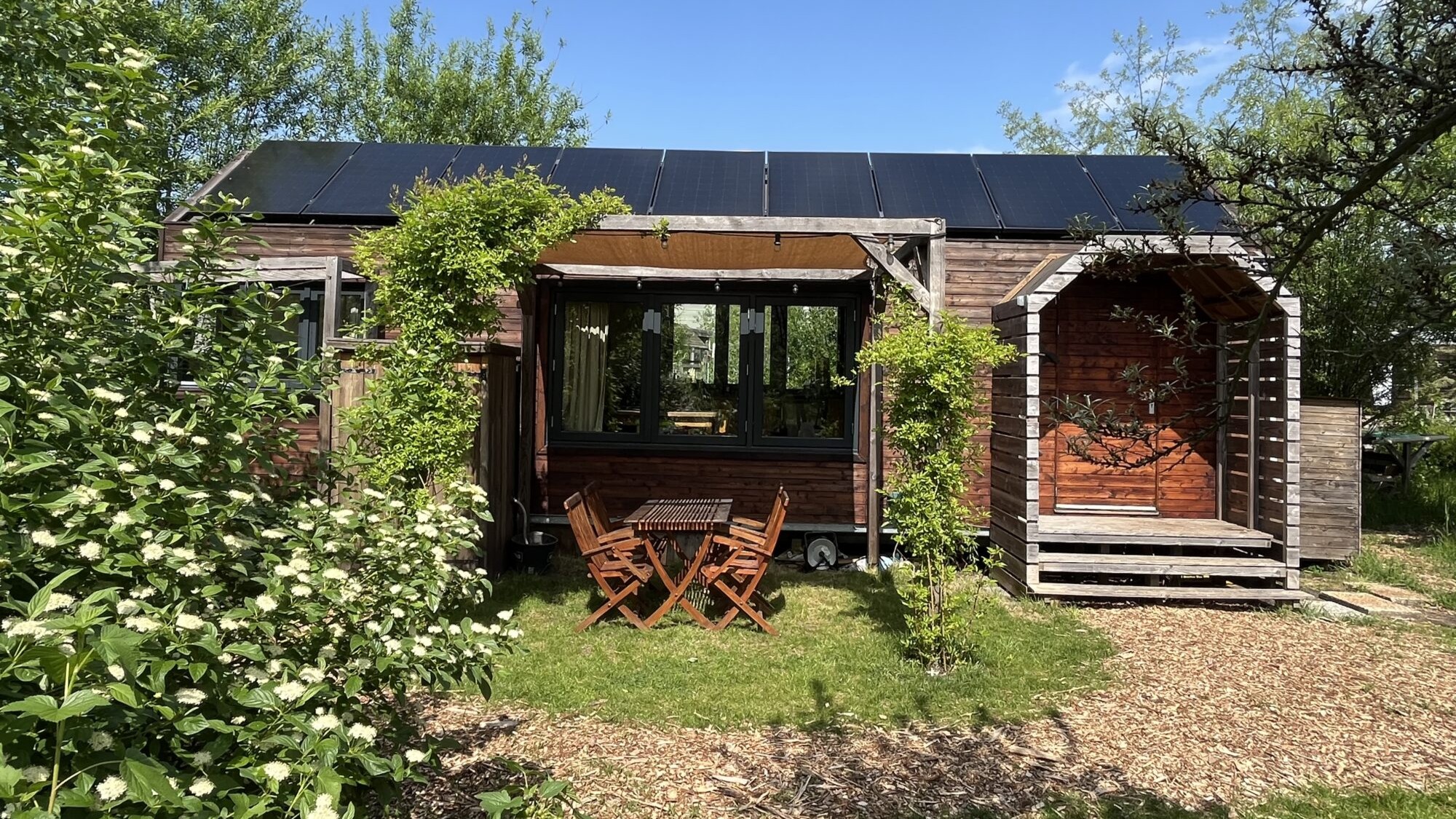
Can a large shrub do the same job?
Absolutely. A large, multi-stemmed shrub may not create a complete parasol above your head, but it can certainly provide a cool, sheltered corner. Hazel, elder, Cornelian cherry and a large serviceberry are all good options. A shrub can make a particularly noticeable difference beside a seating area or on the west side of the garden, where the strong afternoon and evening sun comes from.
The best choice is not automatically the biggest tree – after all, the tallest tree in the Netherlands is over 51 metres tall. You definitely would not want that in your small back garden. 😉 The best tree or shrub is one that stands in exactly the right place, provides enough shade and perhaps also produces blossom, berries, fruit or nuts.
When is the best time to plant?
Autumn is usually the best time to plant a tree or large shrub. The soil is still relatively warm and moist, allowing the roots to start growing before spring arrives. Container-grown plants can generally be planted throughout the year, provided the ground is not frozen and the weather is not extremely hot or dry. Make sure you water a young tree regularly during dry spells in its first few years – even a future green parasol needs time to put down strong roots.
Leave a Reply