
In a Tiny House, every square metre counts. The last thing you want is to sacrifice valuable space to technical systems. A large water heater or a radiator in the wrong place can easily take up space that could otherwise be used for a kitchen cupboard or storage – or simply become an unsightly feature.
Fortunately, there are systems that perform essential functions without taking up much space. However, just because a system is described as ‘compact’ does not automatically mean it is suitable for your Tiny House. The insulation, electrical connection, layout and use of the home all play a role.
These four solutions may be worth considering for a Tiny House.
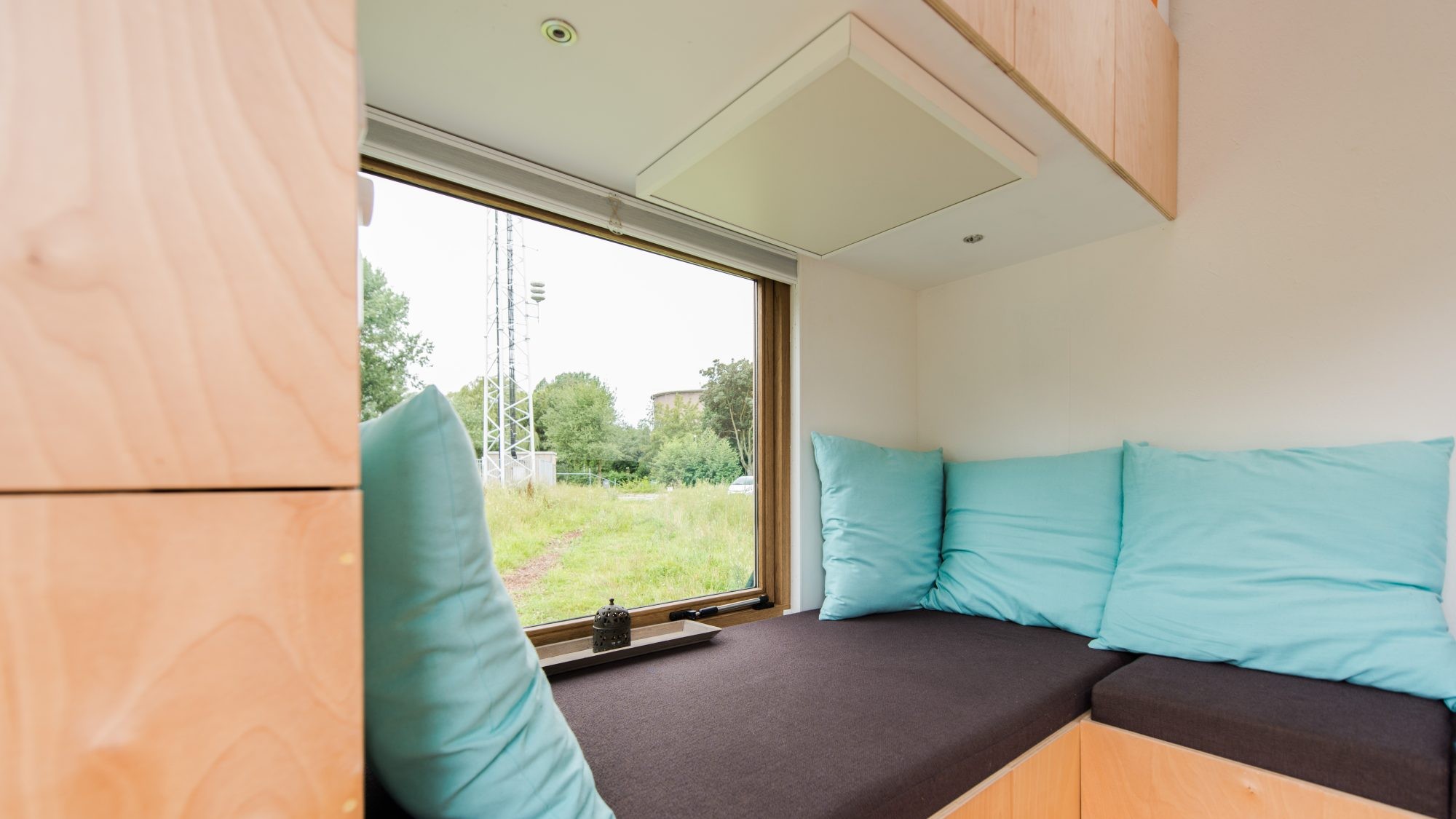
1. Heating with an infrared panel
An infrared panel can be mounted flush against a wall or on the ceiling. This keeps the floor clear and eliminates the need to reserve space for radiators or pipes. The panel mainly heats the people and objects within reach of its infrared radiation. This quickly feels comfortable, even if the air in the room is still slightly cooler.
Infrared heating can work well in a small, highly insulated home or in an area where occasional additional heat is needed, such as the bathroom. However, it is not always the most economical choice as a primary heating system. An infrared panel uses electricity directly to generate heat. If the home loses a lot of heat or the panel is used for long periods, electricity consumption can therefore increase considerably. Have an expert calculate how much power is required and determine the best position for the panel in advance.
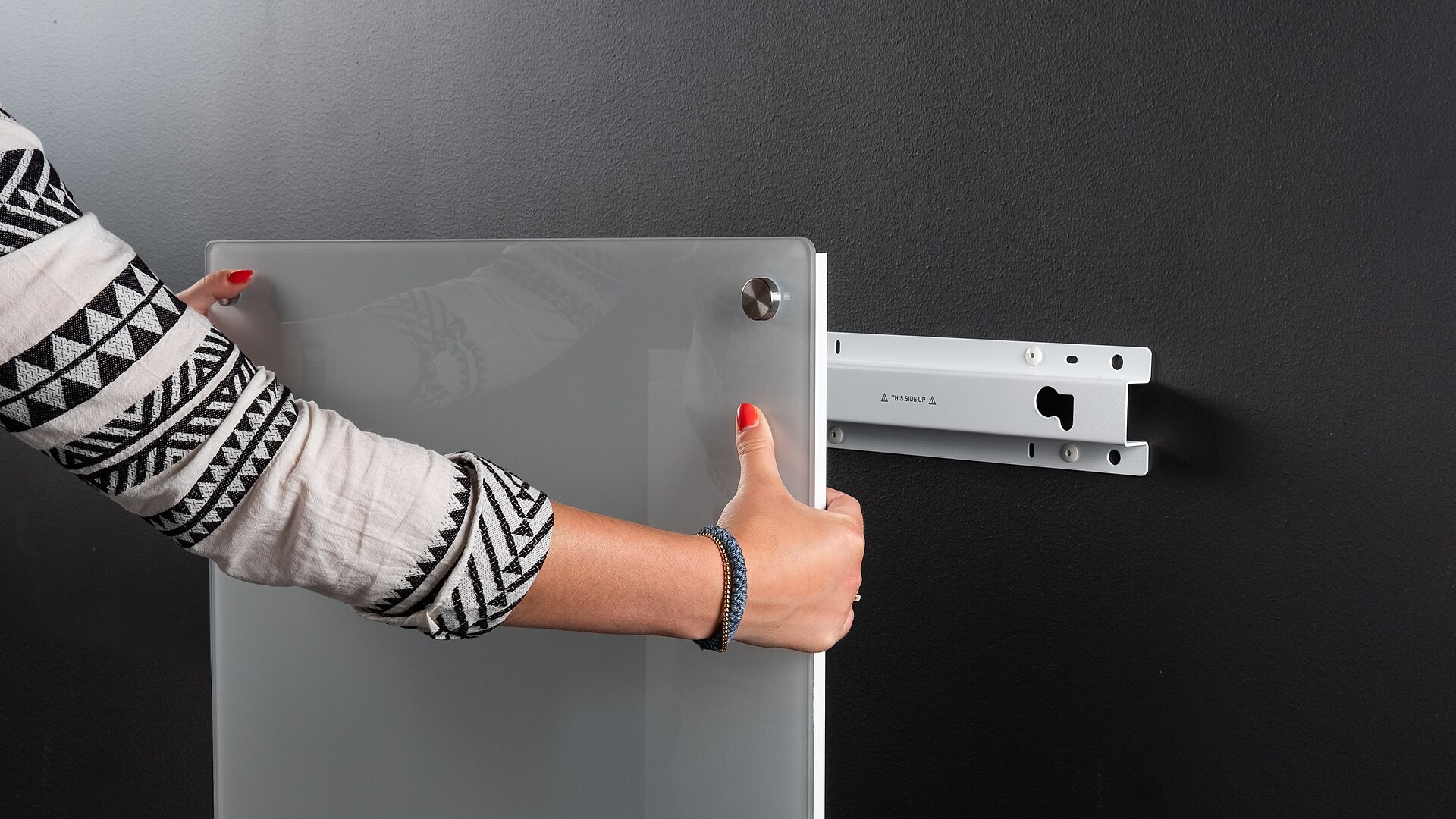
2. Compact ventilation with heat recovery
Good ventilation is particularly important in a small home. Cooking and showering release moisture, while occupants produce CO₂ simply by breathing. As a result, the air quality in a small home can deteriorate quickly.
A decentralised ventilation system with heat recovery, commonly known as MVHR, is installed directly in an external wall. It extracts stale air, recovers heat from it and uses that heat to warm the fresh air coming in from outside. Because it does not require an extensive network of air ducts, this type of system can be an interesting option for a Tiny House.
Make sure you seek advice from an expert. The ventilation capacity must be suitable for the size and layout of the home. You should also consider the noise level, the position of the unit, its electricity consumption and how easy it is to access the filters. Additional extraction may be required in the kitchen and bathroom.
3. Hot water from a flat water heater
A traditional cylindrical water heater takes up a considerable amount of cupboard space. A compact flat water heater is often easier to fit out of sight. Depending on the model, it can be mounted vertically or horizontally on a wall – above the toilet, inside a cupboard or high on the wall in a utility area, for example.
Do not look only at the external dimensions. The capacity should suit the number of occupants and their showering habits. A smaller water heater takes up less space and has less water to keep warm, but it will also run out more quickly during a long shower. Power rating, heating time and safe installation are other important considerations. Always check whether a particular model is genuinely suitable for the intended mounting position.
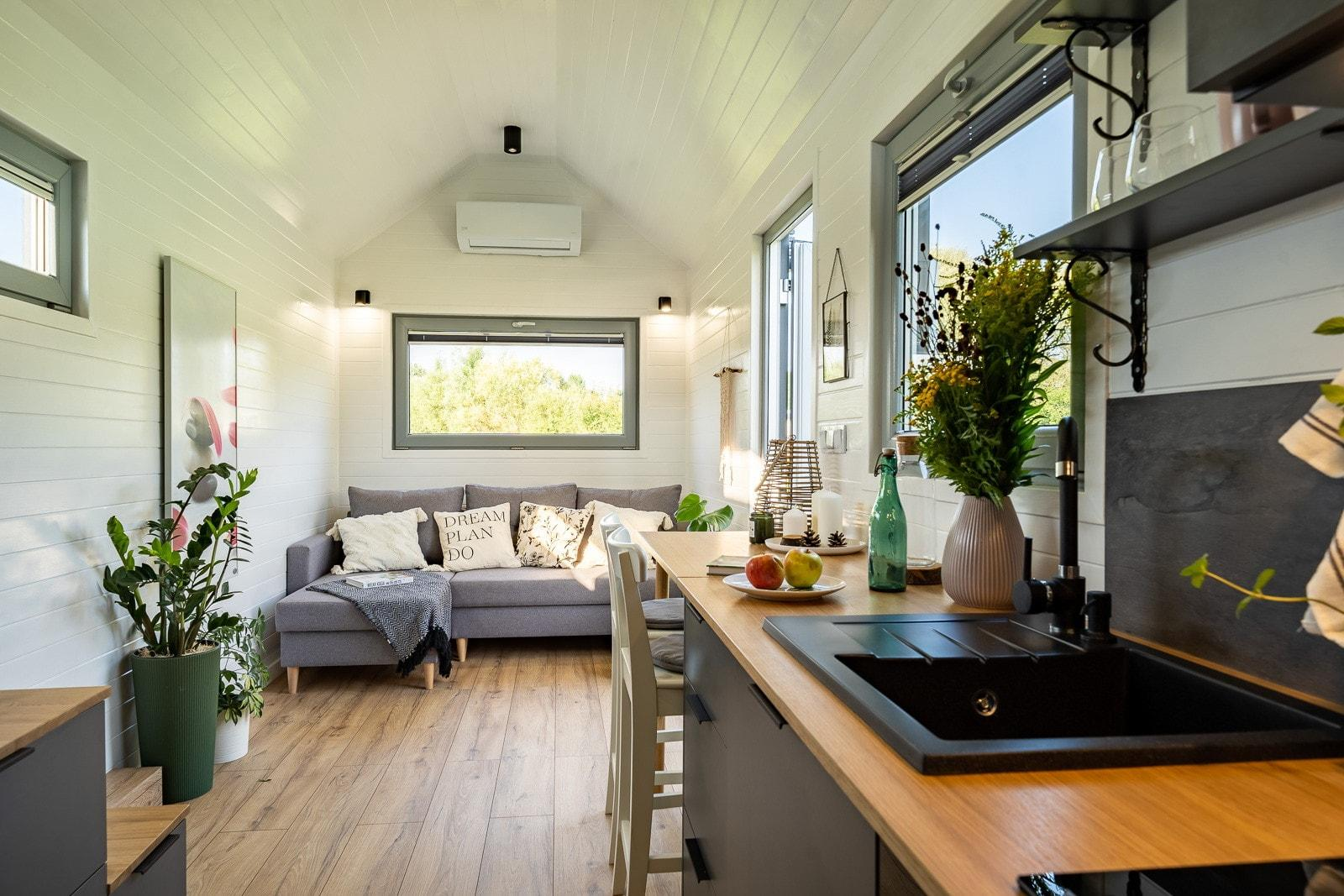
Image: KAP House
4. Heating and cooling with an air-to-air heat pump
Many people know an air-to-air heat pump as an air-conditioning system that can also provide heating. The indoor unit is mounted high on the wall, so it does not take up any floor space. The system extracts heat from the outdoor air and blows warm air into the home. In summer, the process can be reversed to cool the interior.
For a well-insulated Tiny House, this can be a practical combination. However, the system does require an outdoor unit. You should therefore consider the available space, the distance from neighbouring homes, the noise level and the drainage of condensation in advance. The airflow from the indoor unit must also be able to reach the entire home effectively. An air-to-air heat pump only heats the air, so you will still need a separate solution for hot tap and shower water.
Calculate first, choose second
A compact system can save a great deal of space, but it is wise to consider these systems during the design phase. Heating, ventilation, hot water and electricity all affect one another. Have an expert calculate what your Tiny House needs and what the electrical connection can handle. This will help you use the available space efficiently, keep energy consumption manageable and avoid unpleasant surprises later on.
Leave a Reply