
Even though a Tiny House is small, its foundation deserves just as much attention as that of a larger home. What type of screw piles are needed, how deep do they need to go, and how much weight can the soil support? Schroeffundering Holland helps customers from the initial design stage right through to installing the piles.
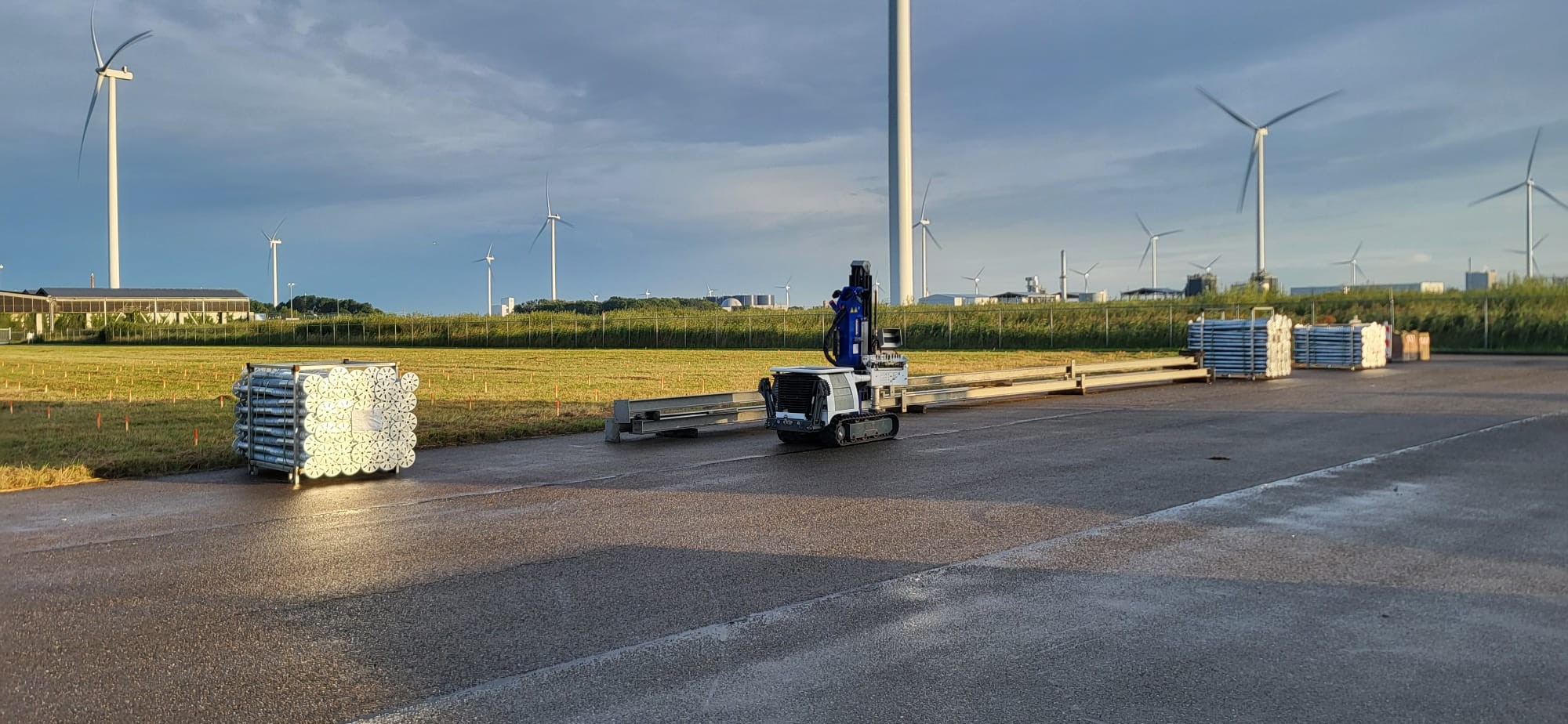
Eight years ago, Schroeffundering Holland started installing screw piles for small structures such as garden sheds, verandas and storage sheds. Since then, the company has expanded its work to include Tiny Houses, homes for people requiring care, multi-generational homes and other prefabricated homes. “We have now installed foundations for more than two hundred small homes,” says Bob from Schroeffundering Holland.
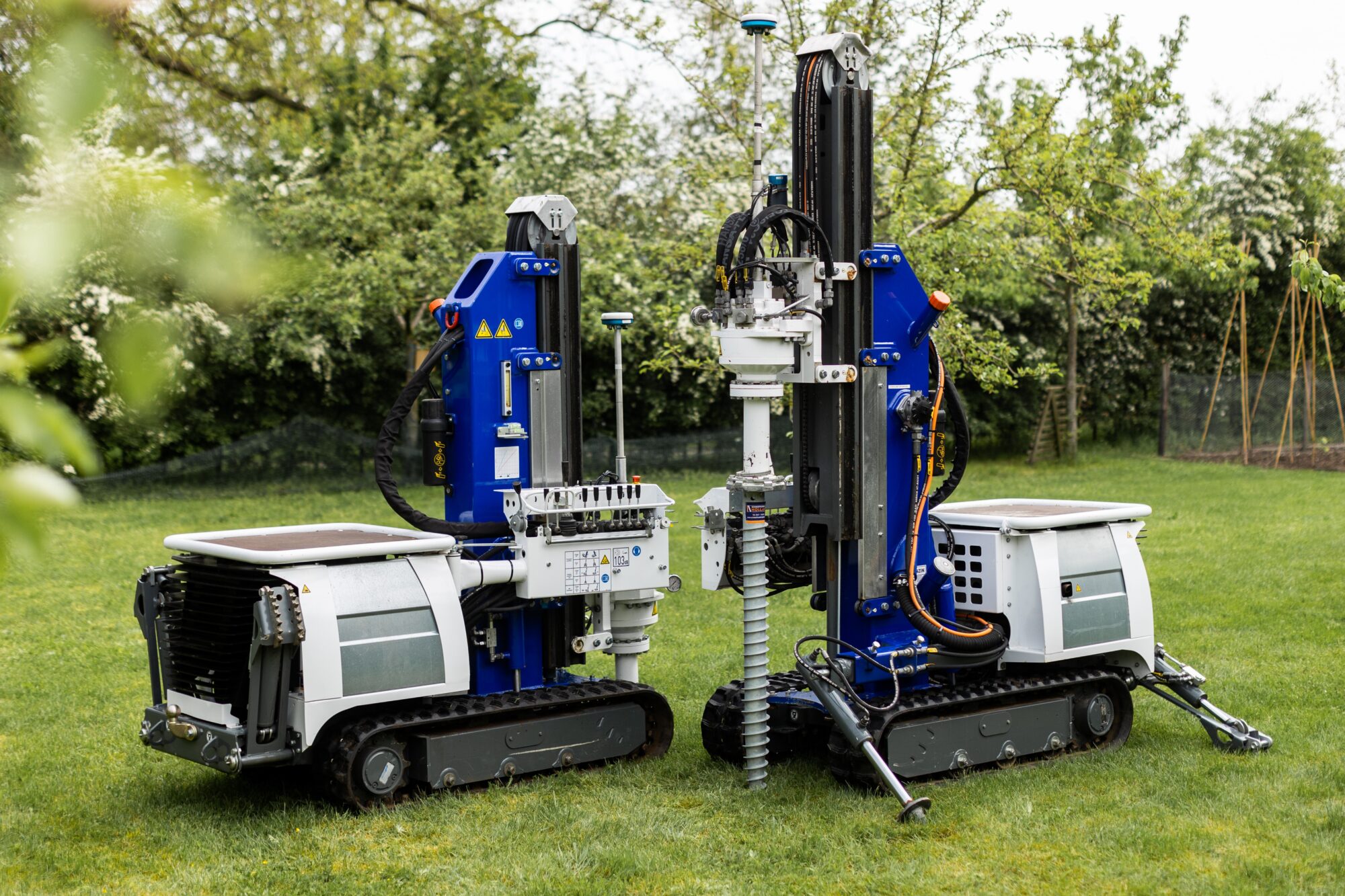
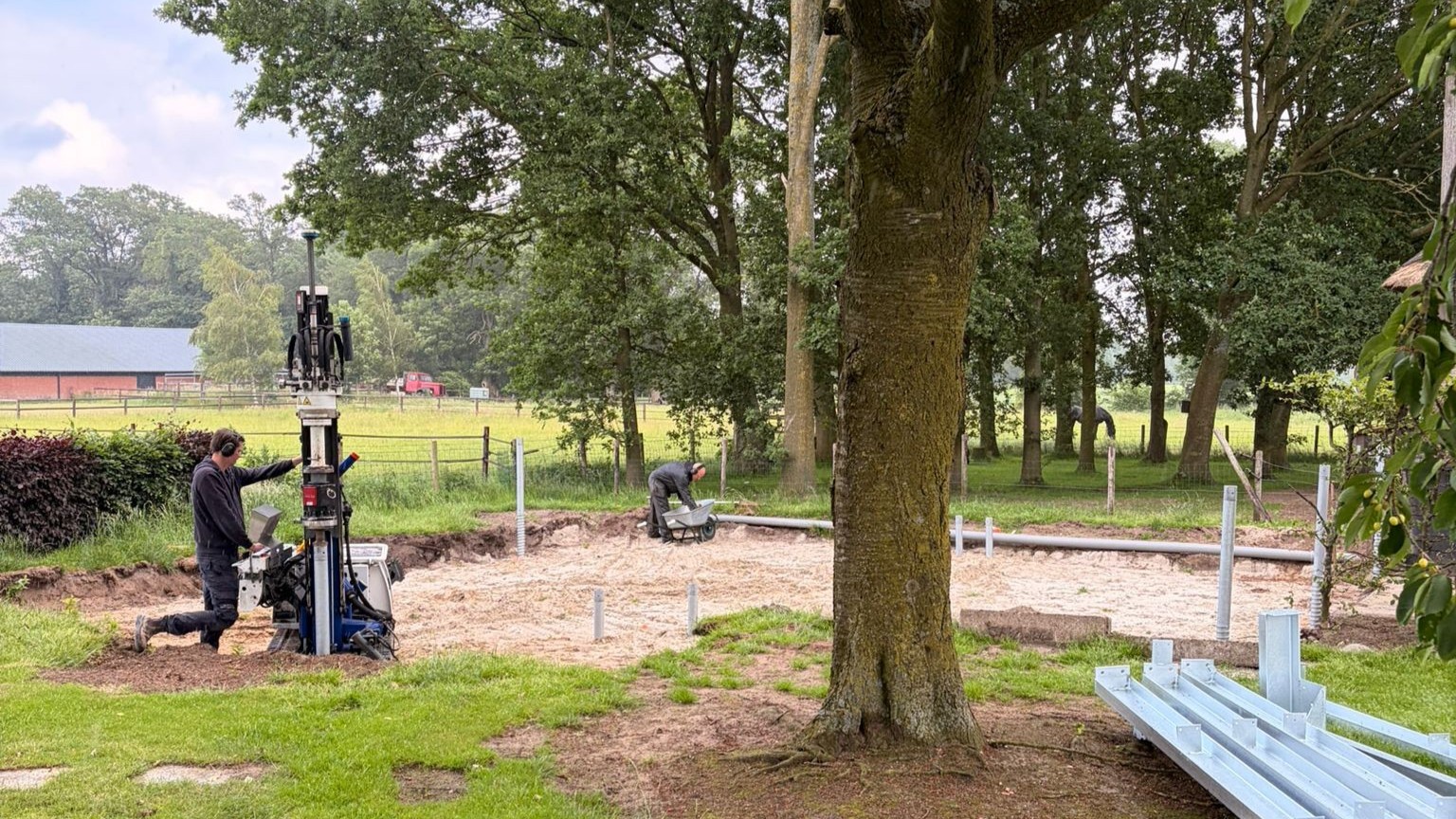
As the company’s work has grown, so has its technical expertise. Schroeffundering Holland commissioned soil investigations and carried out field tests together with a geotechnical consultant and a structural engineer. This enabled the company to collect data on the load-bearing capacity of different piles in different soil layers. The company has since invested considerable time and expertise in further developing its screw pile foundations and machinery. With its current equipment, it can monitor the forces involved while the piles are being screwed into the ground, while the pile length and rotation speed are recorded automatically.
From drawings to a foundation plan
Some customers already have a detailed foundation plan. Others approach the company with a design for their home but are not yet sure what kind of foundation it needs. In these cases, Schroeffundering Holland can help organise the necessary steps, from a soil investigation and structural calculations to a suitable pile layout and the installation of the screw pile foundations.
Sometimes, a home manufacturer specifies more piles than are actually necessary. This can happen because many suppliers are only familiar with screw piles of small diameters. One good example is a home for someone requiring care in Drenthe, where Schroeffundering Holland installed the foundation. The original construction package from Lithuania included a large number of piles. After the foundation plan was reviewed, it turned out that considerably fewer piles were needed. The original plan had been based on very small pile diameters. Increasing the diameter allows each pile to support a much greater load.
What is the most important tip for anyone planning to build a Tiny House?
Start preparing in good time, including arranging a soil investigation. A soil investigation maps the ground conditions and helps determine which type of foundation is suitable for the location.
“People sometimes already have perfectly good drawings and a pile layout, but the soil investigation is still missing,” says Bob. “Existing soil data from a nearby plot or from another structure on the same property may sometimes be useful. Whether that information is sufficient depends on the individual project. We are happy to arrange the soil investigations for you.”
Quick to install and removable later
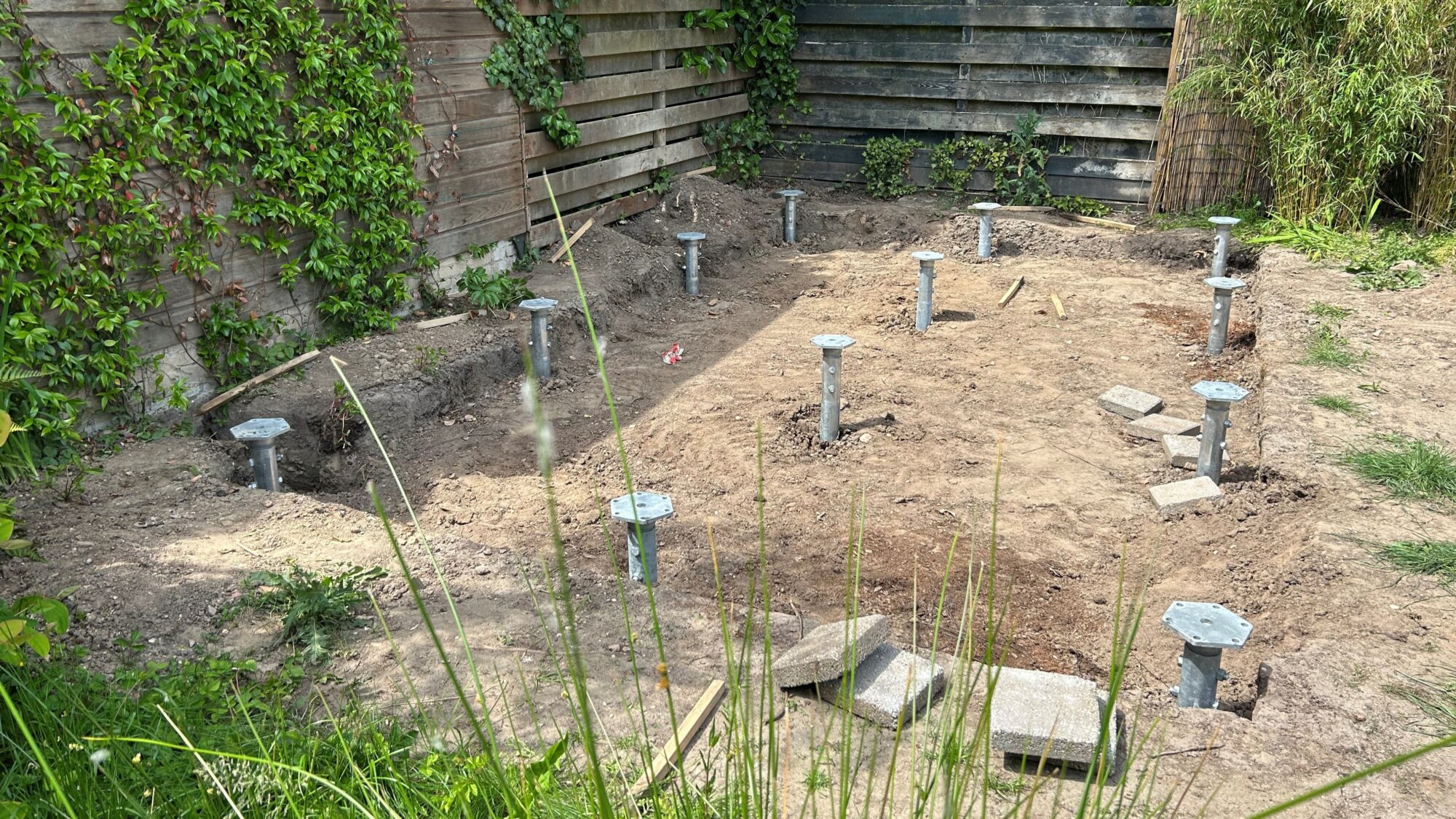
Screw piles are screwed into the ground and adjusted to the correct height. The home can then be placed on top of them. For a Tiny House on a temporary site, it is particularly useful that the piles can also be unscrewed and removed later.
Whether the same piles can be used again at another location depends on factors including the soil conditions and the required pile length. Schroeffundering Holland uses extendable piles, which makes adjustments possible.
Bob explains: “If the load-bearing soil layer is deeper at another location, the screw pile can be extended. That is the great thing about our extendable screw pile foundation.”
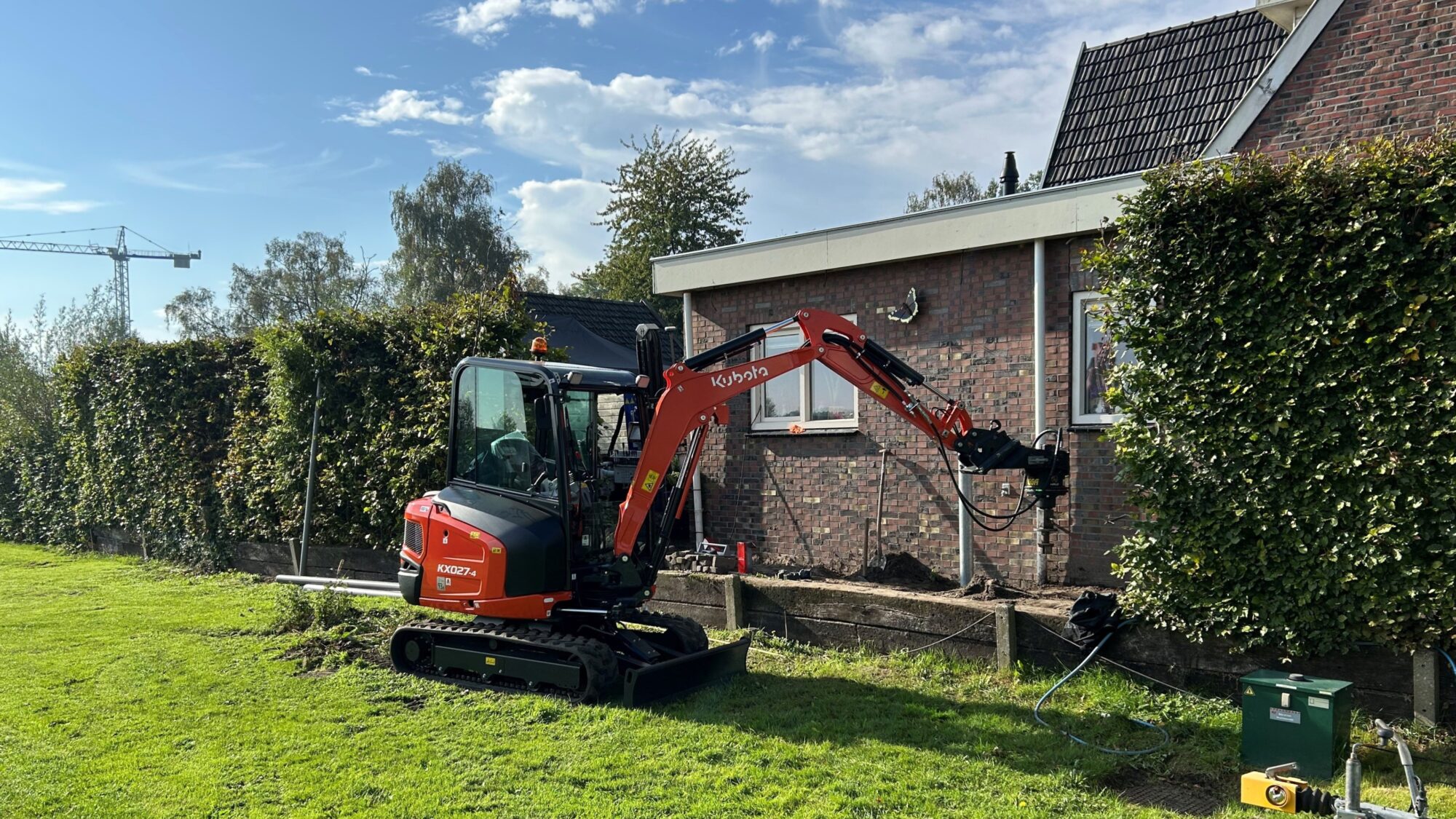
No concrete foundation is needed during installation. Screwing the piles into the ground does not cause the vibrations associated with traditional pile driving. Schroeffundering Holland also has compact machinery for locations that cannot be reached by its larger machines. For situations where fuel-powered machinery is undesirable or not permitted, the company also has electric handheld equipment. In addition, it can install piles without emissions at the point of use by using hydraulic machinery.
Personal contact matters
Although the company’s projects have grown in size, it wants to maintain a personal approach. The team recalls a customer from Helmond who called again after five years. They recognised his voice straight away and still remembered which piles had been installed at the time.
“Our customers are not just numbers to us, and that makes all the difference.”
Anyone planning a foundation for a Tiny House does not need to approach Schroeffundering Holland with a complete pile layout already prepared. A design and information about the location are enough to get the conversation started. The team will then help identify any missing information and determine which steps are needed.
This way, the foundation gets the attention it deserves before the Tiny House is put in place.
This article was written in collaboration with Schroeffundering Holland B.V.
Leave a Reply