
Ecovillage Land van Aine: from vacancy to vibrancy
In the southeast of Groningen, on the grounds of a former potato starch factory, a unique living concept is taking shape: Ecovillage Land van Aine. This ambitious project, initiated by a small group of pioneers, has grown into a thriving community of thirty adults and seventeen children. Eventually, the village will provide space for one hundred people, all working together to build a sustainable, social, and ecological future.
The first plans for the ecovillage were conceived over ten years ago. A group of nine people—of whom seven remained—spent five years developing a comprehensive vision and a solid legal and financial foundation. Finding a suitable location proved challenging. Drenthe, their preferred province, was ruled out due to its increasing popularity as a residential area. Eventually, the group found a site in Ter Apel, Groningen: a former industrial plot of 9.5 hectares, mostly green with some existing buildings.

With support from the province and municipality, a feasibility study was carried out. Although parts of the land were contaminated due to its industrial past, cleanup proved feasible. Thanks to constructive collaboration with local authorities and the land’s steward, the group was able to acquire the property for a symbolic sum.

What began as a small group of initiators has evolved into a diverse community with a wide range of talents. There are technical specialists, including an off-grid expert and a horticulturist with construction experience, as well as people focused on community building, education, and creative activities. The ecovillage uses sociocratic decision-making, with different circles responsible for areas such as construction, food supply, and finances.

Fenna and her husband, who previously lived in an ecological community in France, were so convinced by the well-prepared plans that they decided to join. They now live in a caravan on the site, along with other residents awaiting the completion of their permanent homes.


The community is currently busy preparing the land for construction and installing utilities. Every resident contributes financially to the development, with an initial investment of €15,000 per household. This money is used to remove asbestos roofs from the factory buildings, prepare the residential plots, and install infrastructure such as electricity and water.
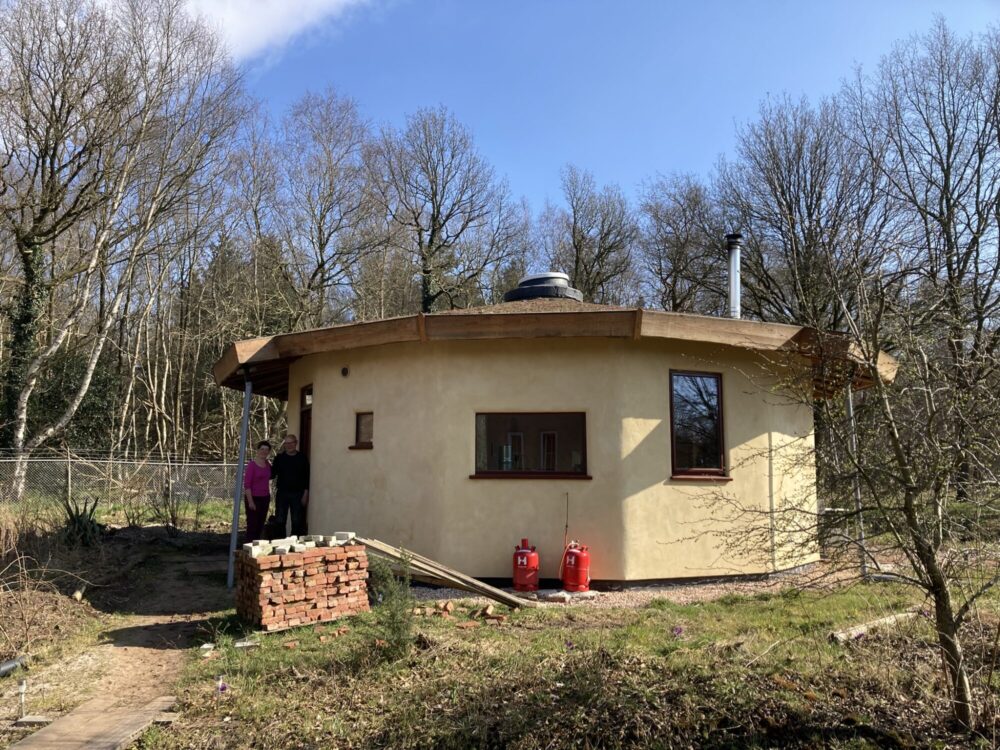
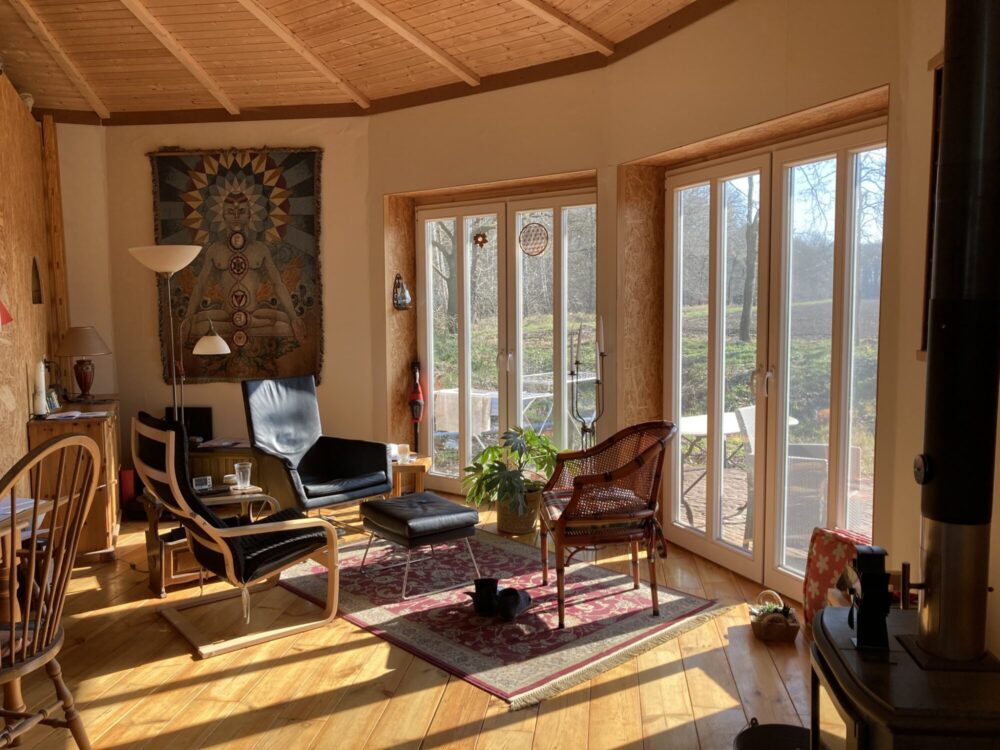
The first homes being built are detached houses, ranging from about 45 m² to family homes of 80 to 100 m². The next phases will focus on terraced housing and additional communal spaces. The site also includes designated space for ten Tiny Houses, which are allowed to remain permanently. In addition, the ecovillage has an experimental status, allowing for innovation in ecological building techniques.

Ecovillage Land van Aine is not only about sustainable construction but also about fostering a strong sense of community. There is a large permaculture vegetable garden, a food forest, and chickens and horses are kept. The community invests in shared facilities such as a common living room and kitchen, workshops in the former industrial buildings, and guest accommodations for volunteers. The better the communal spaces are organized, the smaller the need for large private homes—a philosophy that aligns perfectly with the Tiny House mindset.
Besides physical infrastructure, there is also a strong focus on social activities. Residents sing, dance, and meditate together, and they regularly cook and share meals. Alongside a dedicated volunteer group, there is always something being built, gardened, or repaired on the property.
Ecovillage Land van Aine is an inspiring example of how to create a sustainable living environment rooted in a strong community spirit. The process demands perseverance, creativity, and cooperation, but the results are promising. The ecovillage shows that it’s possible to step off the beaten path and create a home that benefits both people and the planet.
Curious to learn more about Ecovillage Land van Aine or interested in becoming part of this special project? Visit:
Read the full story behind the name of Ecovillage Land van Aine here.

Photography: Ecodorp Land van Aine and Marjolein Jonker
Very interesting initiative. I live in Groninen and would like to come and vist you. I have a car.
How can I arrange this?
Thank you.