
Compact living can be remarkably comfortable when a home is well designed and the outdoor space receives just as much attention as the interior. Because indoor space is limited, the outdoor area often plays an important role in daily life. A covered outdoor space allows you to make better use of that area and creates a natural transition between indoors and outdoors. In doing so, you not only increase your living space but also your overall comfort.
When is a Tiny House suitable for a covered outdoor space?
Not every Tiny House is the same. Some homes already have a porch or awning, while others open directly onto the garden. Many people consider a covered outdoor area an essential feature of a Tiny House, and for good reason. It can be a valuable extension of your living space, especially if you enjoy spending time outdoors, frequently entertain guests, or need additional sheltered storage.
A covered outdoor space provides protection from rain, strong sunlight, and wind, allowing you to enjoy your garden for a larger part of the year. It is also highly practical. Think of storing wet coats, muddy boots, gardening tools, or firewood. In a home where every square metre counts—and where you would rather not bring extra moisture indoors—it is helpful to keep these items outside the living area.
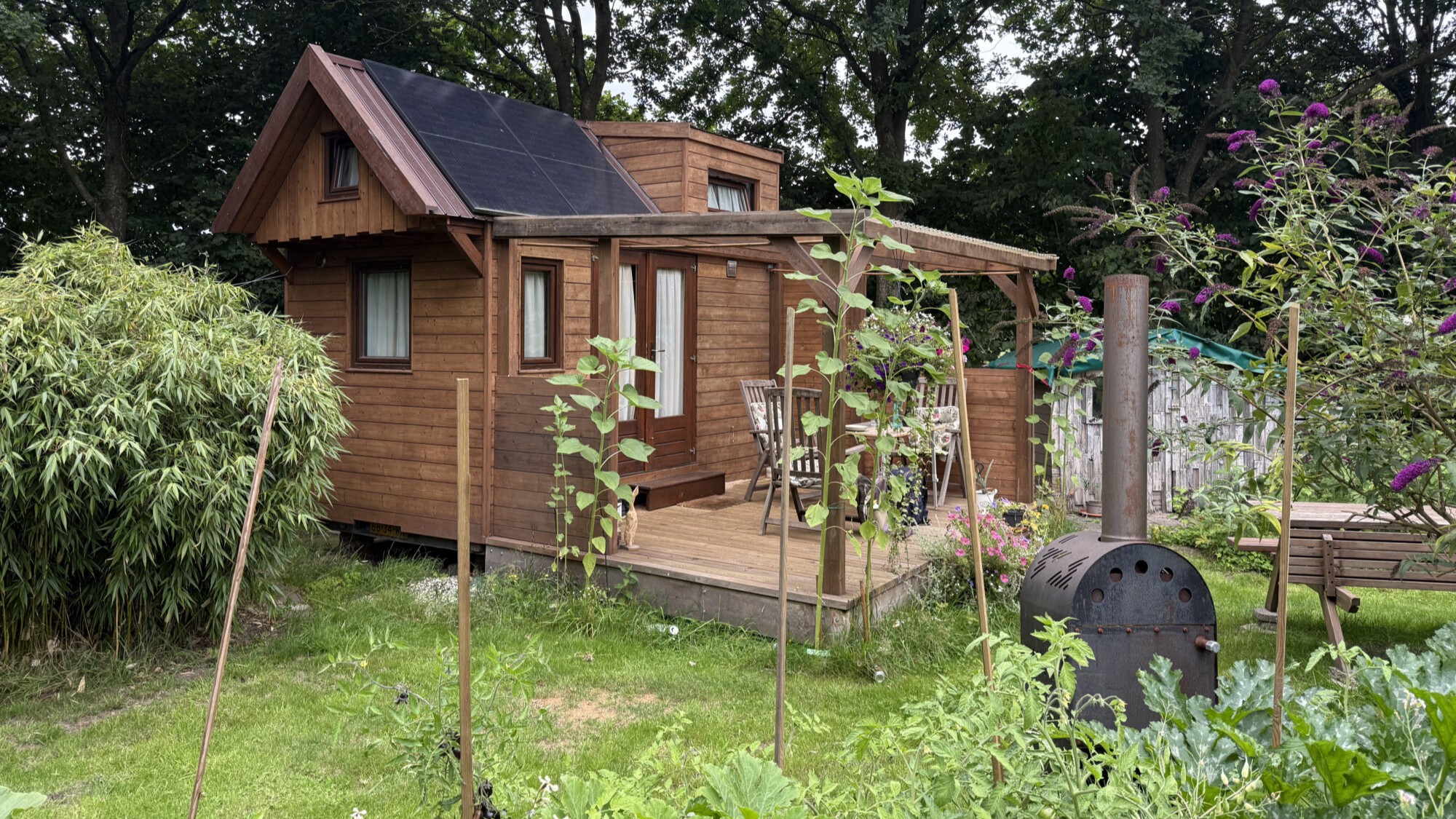
Bridging the gap between indoors and outdoors
Many Tiny House residents consciously choose a lifestyle that brings them closer to nature. Large windows, French doors, and clear sightlines to the garden all contribute to that experience. A covered outdoor space enhances this effect by effectively adding an extra living area to your home.
It becomes a place where you can enjoy breakfast, work, read a book, or simply relax while overlooking your garden. The boundary between indoors and outdoors becomes less distinct, while you remain protected from the elements.
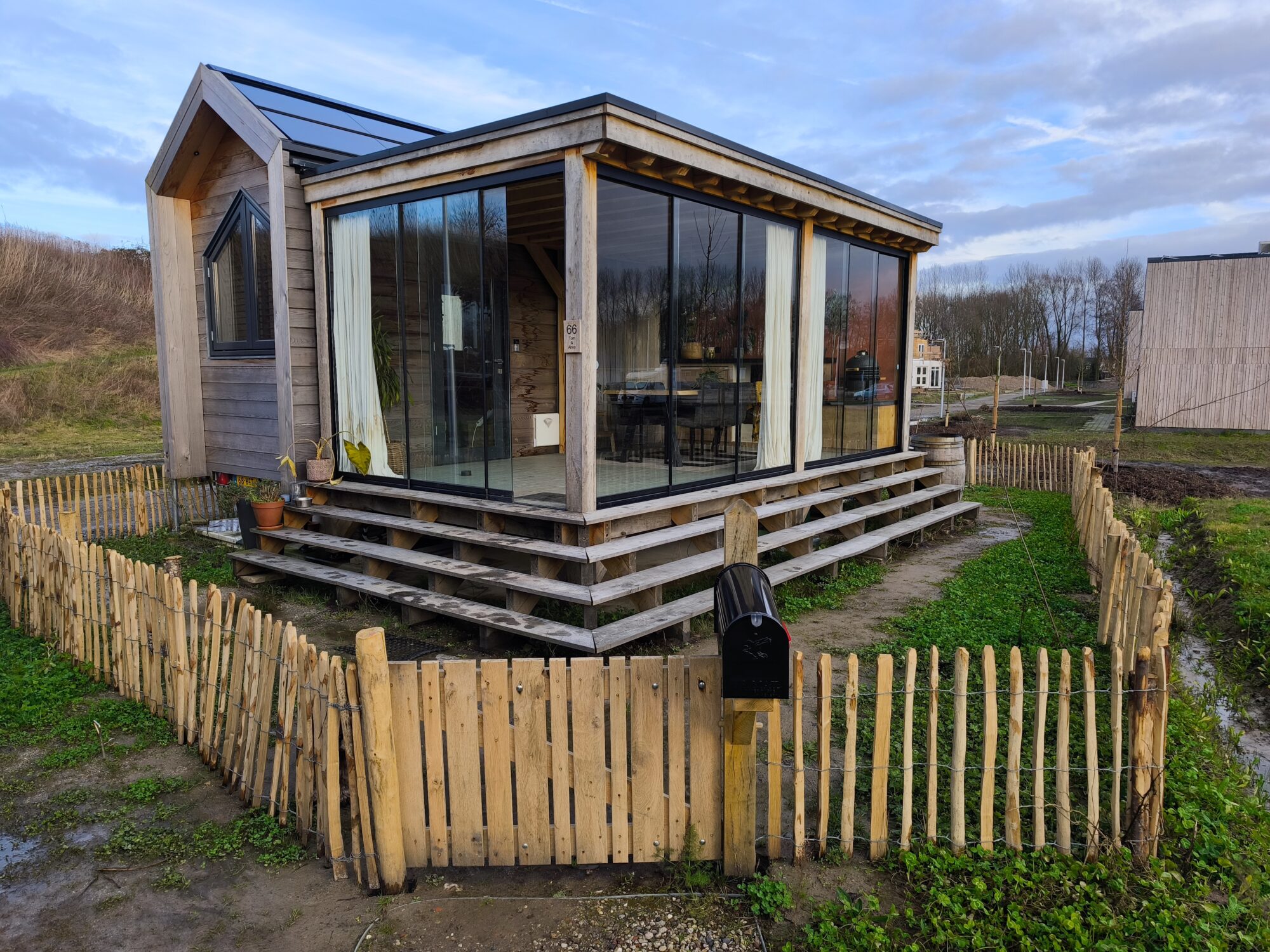
Those looking for even more comfort may choose to partially enclose the space with glass sliding doors. This allows you to maintain your view of the garden while keeping wind and rain outside. On sunny days, the panels can be opened completely, transforming the area back into an open outdoor space. When the doors are closed, the space functions as a sunroom that warms up quickly—even during winter—and acts as a thermal buffer for the house, helping to reduce energy consumption.
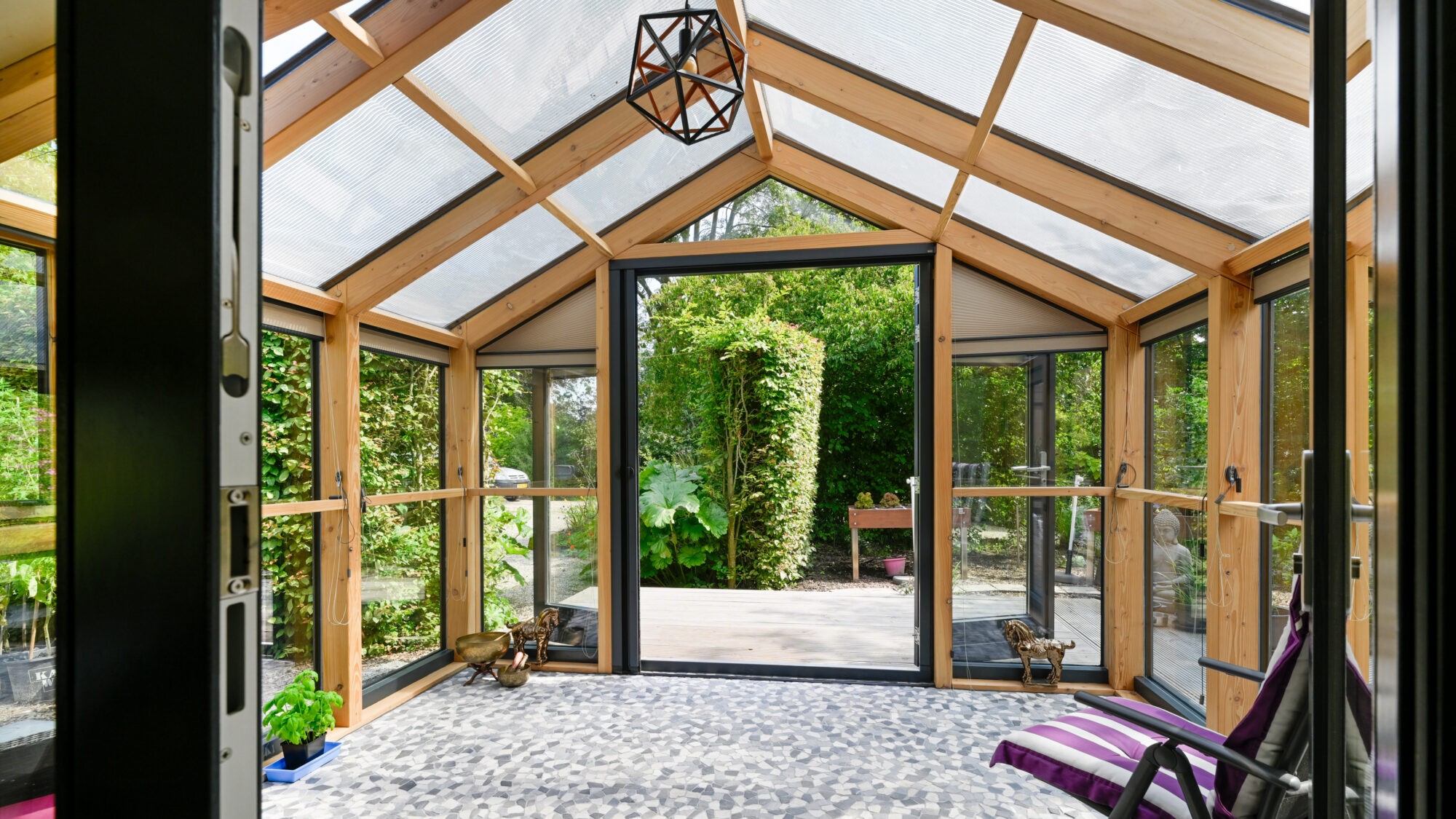
Can you install a covered outdoor space without permission?
Before making plans, it is important to check the regulations that apply to your plot and home. Municipalities often specify a maximum buildable area. In many cases, this includes not only the house itself but also outbuildings, sheds, and covered outdoor structures.
The exact rules vary from one municipality to another and sometimes even between individual housing projects. Additional requirements may also apply through local planning regulations or from the landowner if you rent your plot. Always check:
- The maximum permitted built-up area on the plot;
- Whether a permit or notification is required;
- The allowed dimensions and height;
- Any minimum distance requirements from property boundaries.
Taking the time to investigate these matters beforehand can help prevent disappointment later.
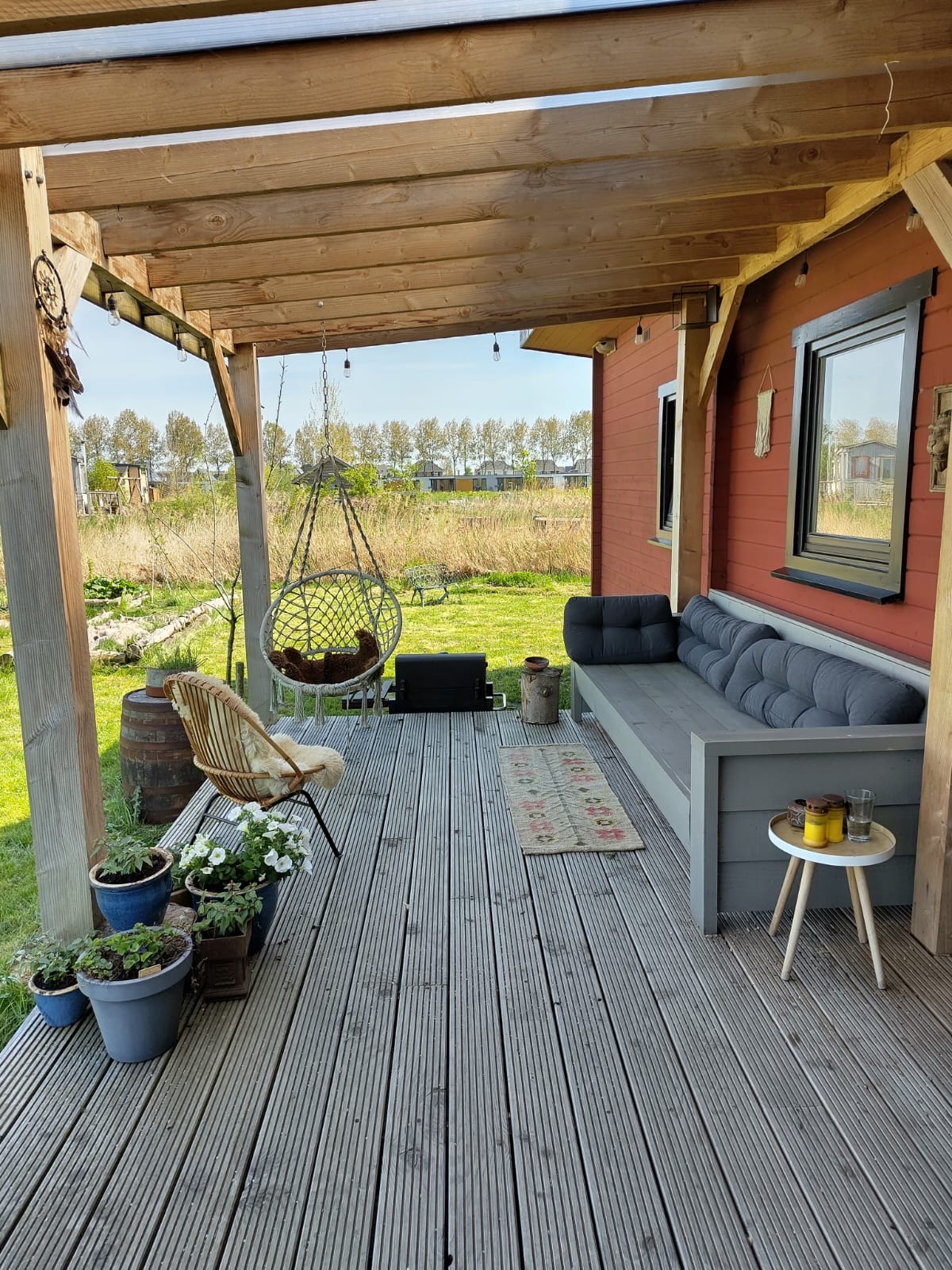
Can glass sliding doors be installed everywhere?
Glass sliding doors offer many benefits, but they are not suitable for every situation. The structure must be strong enough to support the weight of the glass panels. It is also important that the system integrates properly with the covered structure and can withstand local wind loads.
Local regulations may also play a role. When an open covered area becomes largely enclosed, municipalities may assess it differently than a fully open structure. It is therefore wise to verify in advance how your plans fit within local regulations.
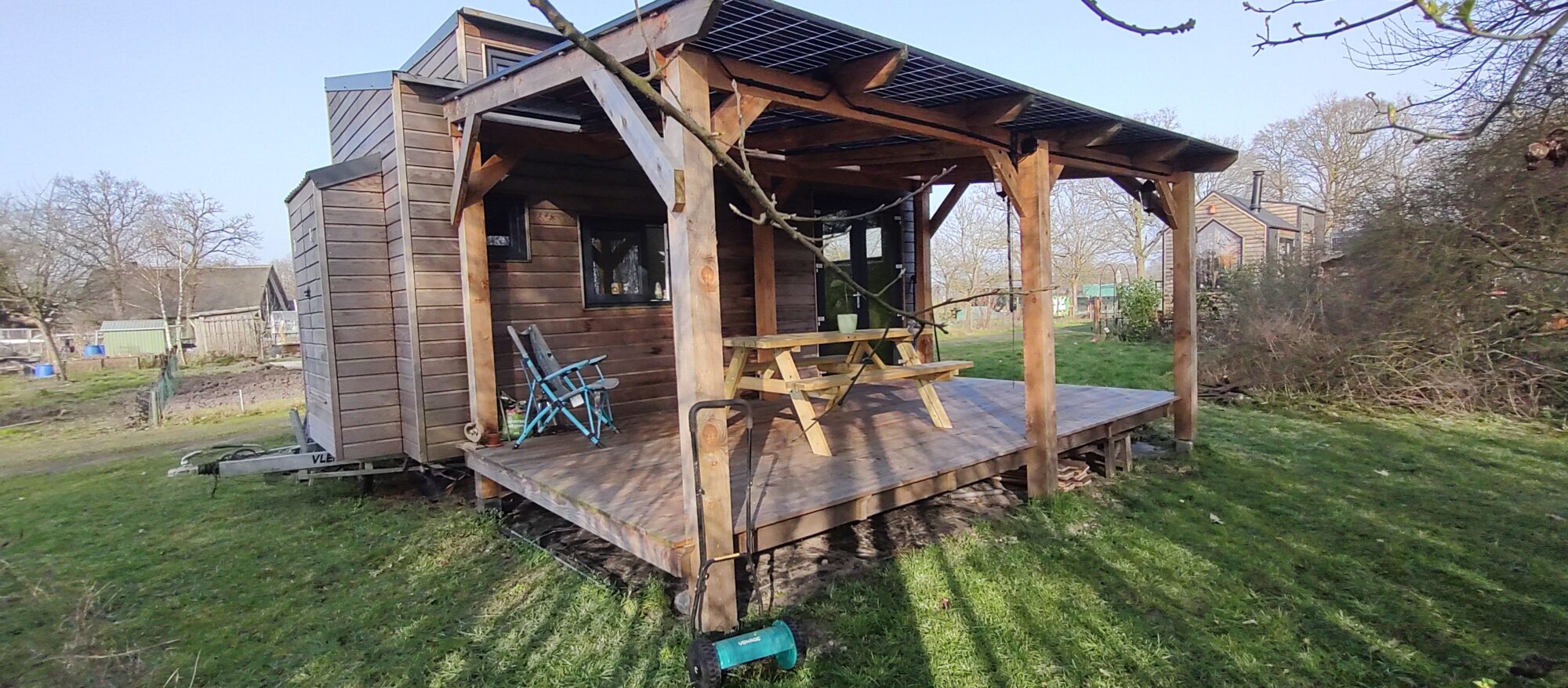
More living space without building bigger
For many Tiny House residents, a covered outdoor space is an attractive and affordable way to improve living comfort without expanding the house itself. You retain all the advantages of compact living while gaining a versatile additional space.
Whether you opt for a simple porch or a more sheltered outdoor room with glass sliding doors, a well-designed connection between indoors and outdoors can make your Tiny House feel significantly larger than its actual square footage suggests.
Leave a Reply