
Finding a beautiful location for your Tiny House remains a challenge. Can you find a municipality willing to cooperate with your plans? Do you want to team up with other Tiny House residents in a joint plan, or are you going for your own spot? Will you collaborate with a builder or developer? We asked several Tiny House builders about their experiences with developing sites. There are possibilities, but it doesn’t happen automatically.
Liberté Woodscapes
Gijsbert Schutten has been building Tiny Houses ever since the first Tiny Houses were spotted in the Netherlands. He has even lived with his family in a family Tiny House at multiple locations, which he built himself. By now, with his company, Liberté Woodscapes, he is also responsible for building multiple houses at the same location.
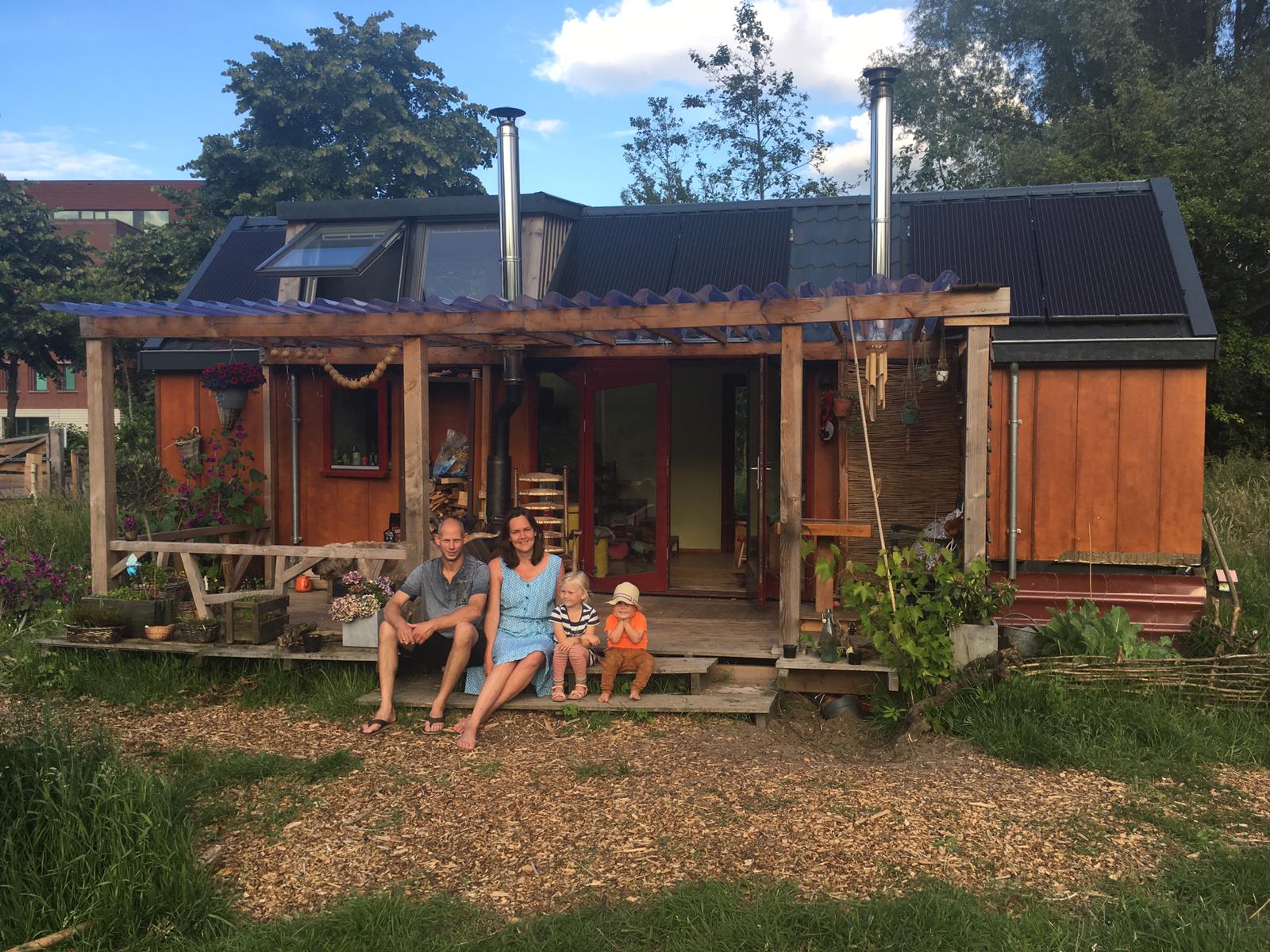
The pioneering builder has experienced a lot during the realization of Tiny House sites and can speak about it with enthusiasm: “As Liberté, we have not developed sites ourselves so far. We are often involved in a project early on, but the initiative for development often lies with the municipality together with an initiative group. We join in with a wealth of experience and technical knowledge. But naturally, I have experienced a lot as a Tiny House resident and enjoy listening to the stories customers tell me about the place where their Tiny House will be located.
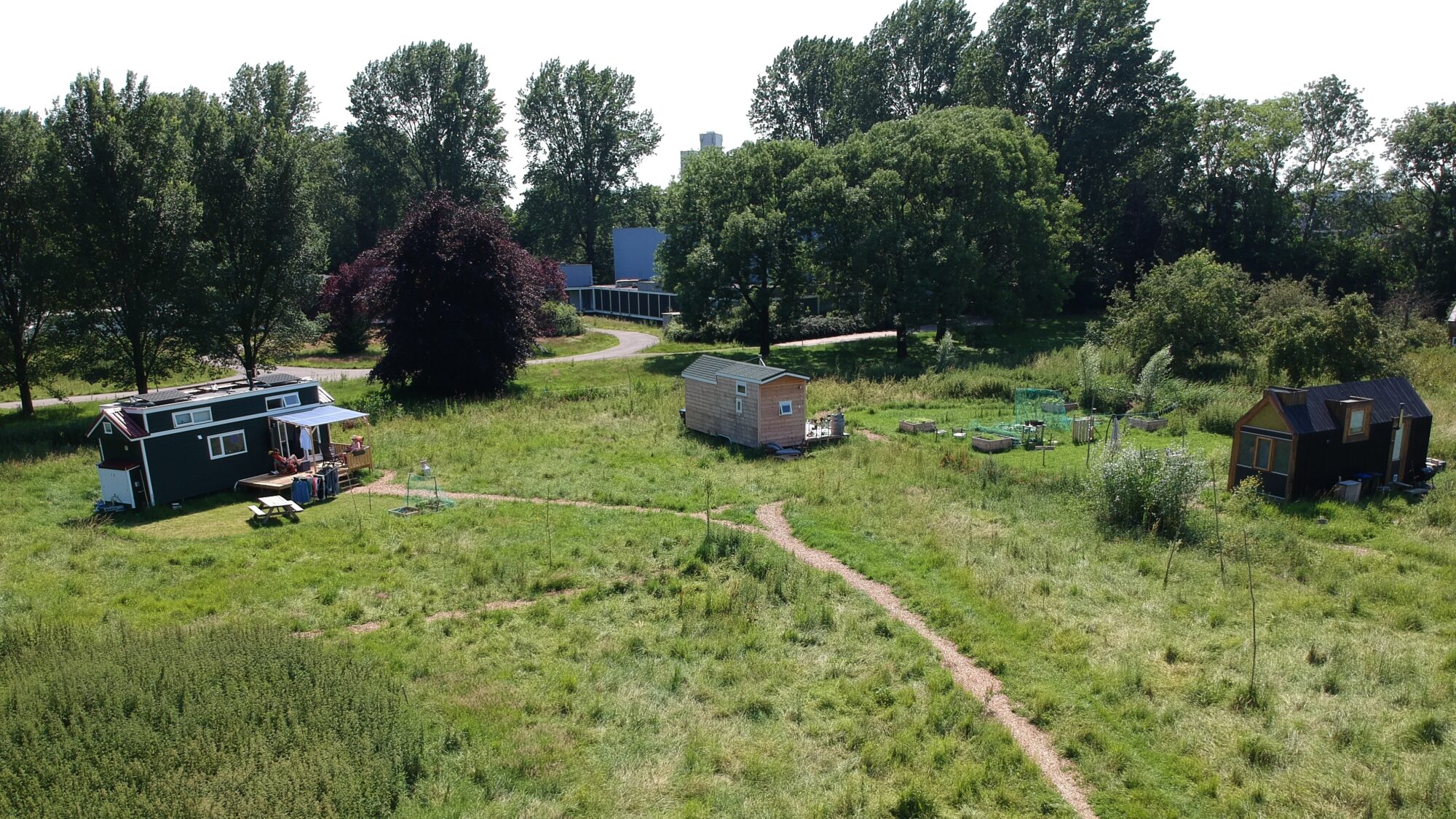
Image: Kleinhuizen Nieuwegein, the first Tiny House project where Gijsbert and his family have lived.
The early days
In the early days, locations were not necessarily easier to find than they are now. But once a location was found, it was quite simple to realize something there. There were not many requirements, and often, as an initiative group, you had to take care of things like the infrastructure (water, electricity, sewage) yourself. Permits were also very simple; sometimes an entire project could be permitted based on the sketch of just one house. Municipalities had little oversight, and as a group, you had a lot of freedom.
As a builder, apart from a maximum surface area, there were few to no requirements regarding the design. The disadvantage was that the projects were often short were, off-grid living is actually quite difficult in the Netherlands, and due to a lack of coordination, things could sometimes get messy.
Examples from the early days include Kleinhuizen, Nieuwegein; Tiny House Alkmaar; Pionierskwartier Delft en Vonk in de wijk Hilversum.
Daily practice
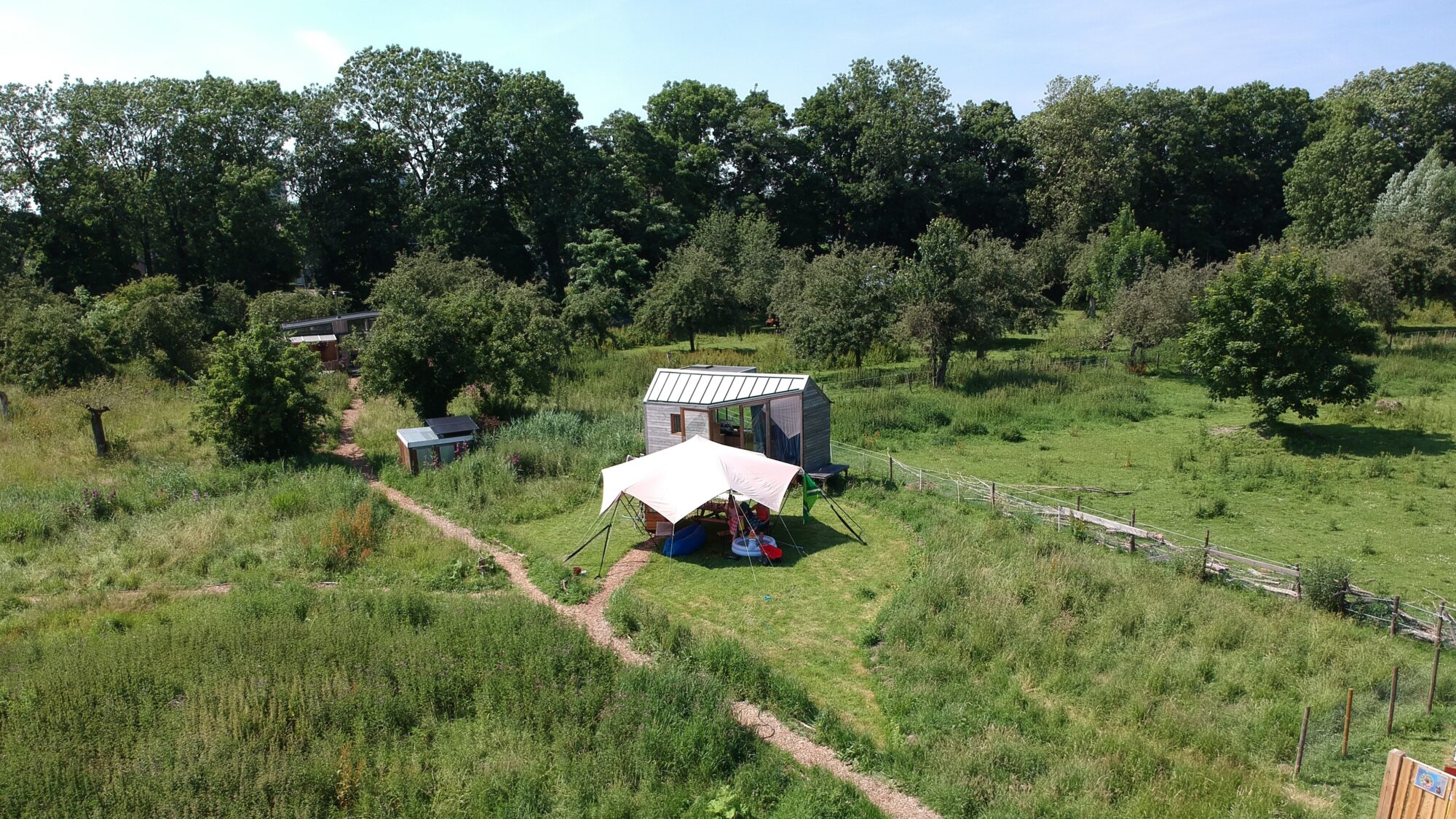
Currently, there are many opportunities for small-scale projects, because this is also possible in places where traditional construction/development is difficult or where commercial project development has too much impact on the environment and a small-scale plan fits better, such as in Lisse.
A major challenge at the moment is getting the utilities sorted out. We are noticing this with multiple projects. Because the lead time of a Tiny House project is often much shorter compared to a regular project—construction can start 6 months after the first contact—utility connections can cause delays in the process.
Sometimes the residents have already left their old house and moved into their Tiny House, but there are no utilities yet. This presents an opportunity for improvement for the municipality and utility companies to speed up processes and keep communication with residents clear.
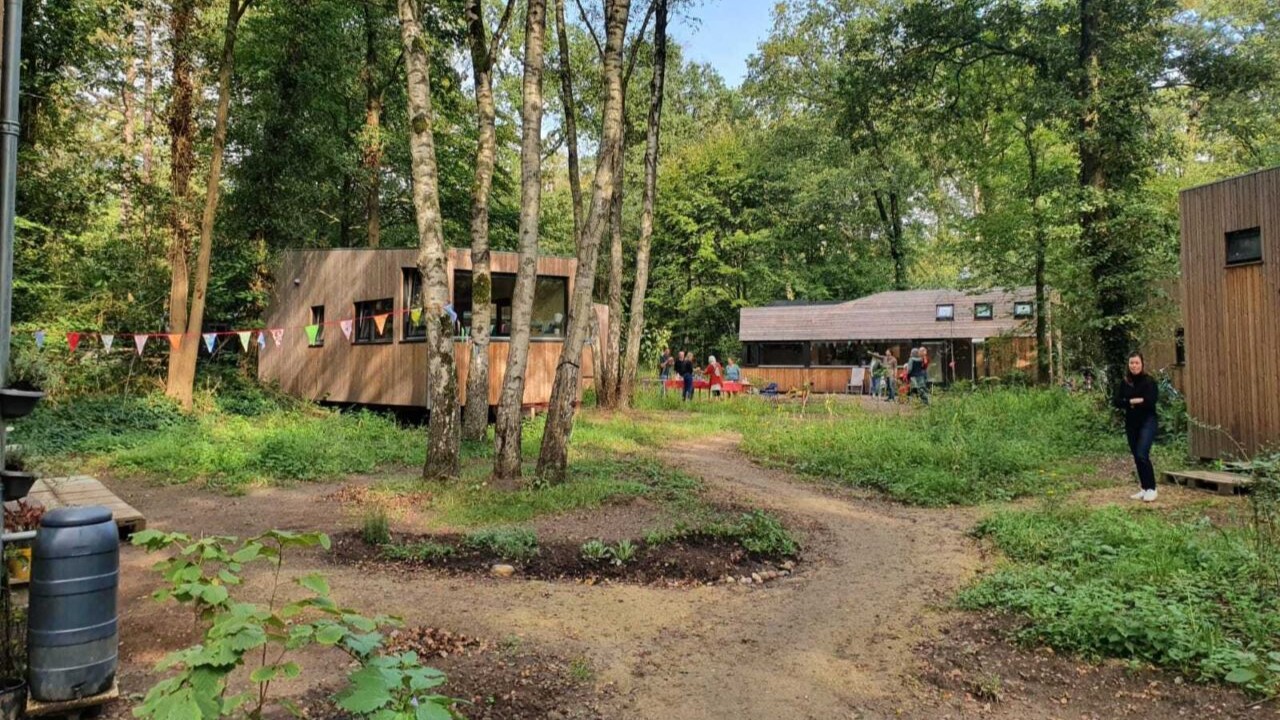
Image: Mayordomio, a Tiny House project in Amersfoort, realised in coöperation with Liberté Woodscapes
Looking for a location
“To find a suitable location, you often need to know your way around locally. Since we deliver throughout the country, that is difficult for us. It would be an option at most within our own municipality, but because it requires specific knowledge and costs a lot of extra time and energy, we are not actively pursuing this.
We do, however, like to be involved early in a development to contribute our expertise. This allows us to help prevent illogical requirements and limitations from being imposed on the design and to ensure that the project is structured in such a way that the homes can be financed through the bank.
Landscape integration and designs that are all individual yet fit together are also areas in which we at Liberté have a lot of experience. We actually always apply for permits for our projects, whether they are individual assignments or more collective ones.”
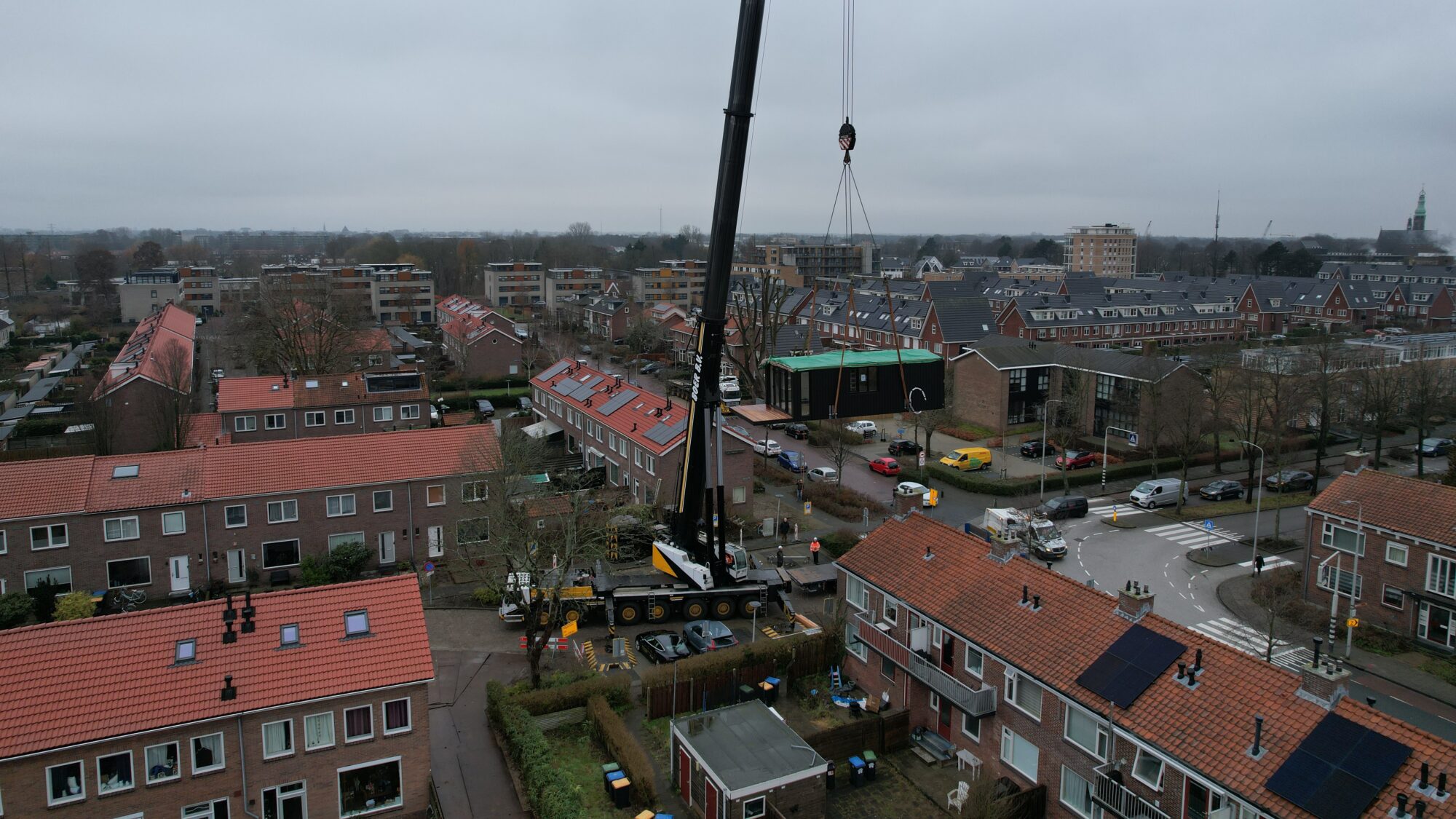
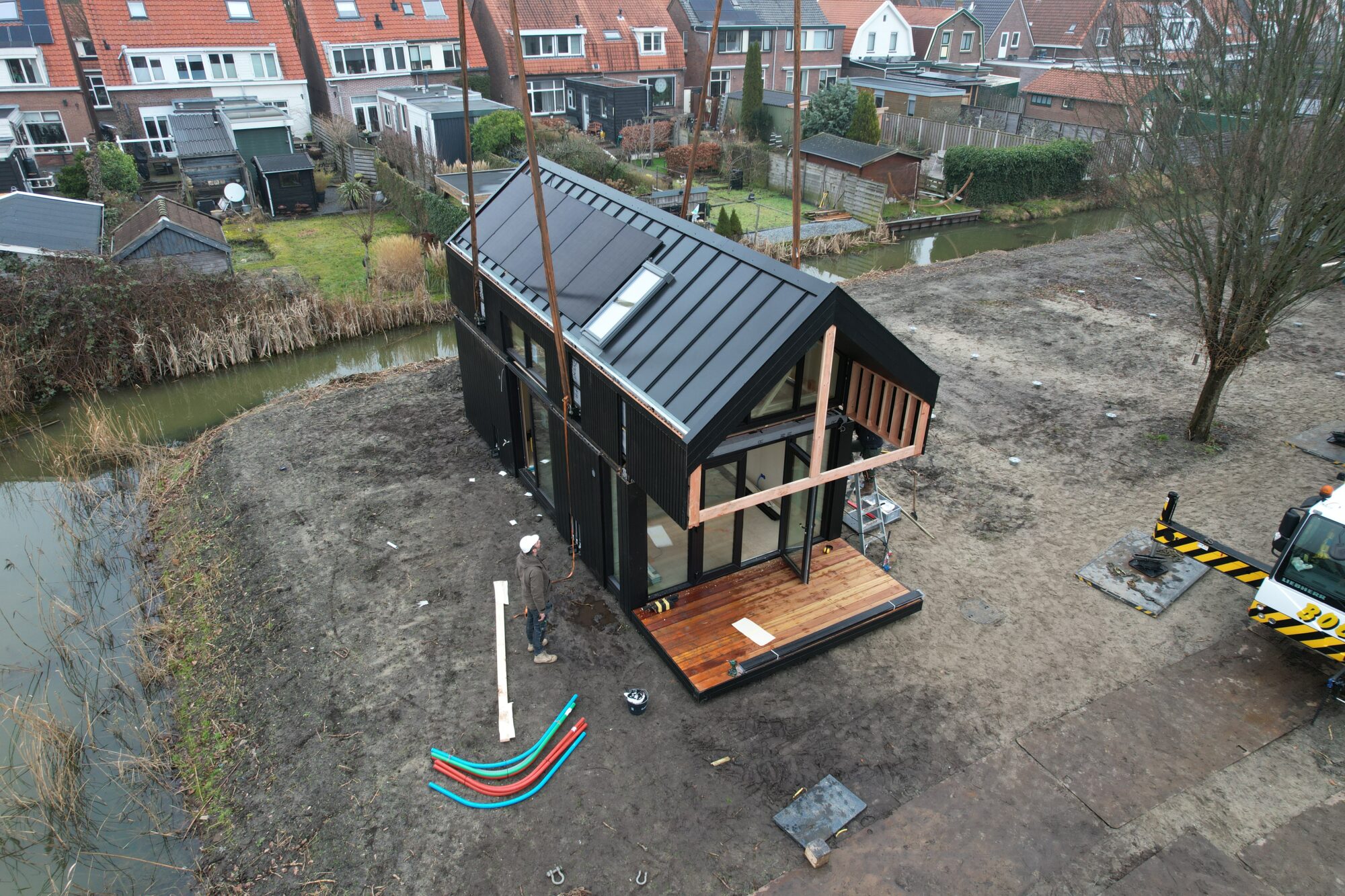
Image: placing a Tiny House in Lisse.
The role of municipalities and initiative groups
Gijsbert appeals to municipalities regarding location development: “If a municipality takes the lead and assumes responsibility in the right way, you can create a seriously good project that is of high quality and truly contributes to alleviating the housing shortage.”
He calls upon initiative groups to make their plans concrete: “Ensure your project is representative, serving as an example of a small-scale, nature-inclusive neighborhood. It helps other groups and municipalities if there is something visible that adds value to the municipality.”
Gijsbert certainly sees opportunities for finding suitable locations for Tiny Houses: “I think the pressure on land remains undiminished, so sometimes it is good to color just outside the lines. Due to their nature and size, there are often more possibilities for Tiny Houses than for regular construction. And you see that it is increasingly becoming part of ordinary neighborhood development, where a corner or a number of plots are reserved for homes with a small footprint.”
Photocredits: Lisse: Joren Dekker/Bietmedia, others Gijsbert Schutten.
Leave a Reply