
In December 2021, Ingrid’s Tiny House was transported to Olst on a low loader truck. She became the very first resident of Olstergaard. The house — designed by Ingrid herself and built by Liberté Woodscapes in Werkendam — arrived in a neighborhood that at the time was little more than an open field with a few construction roads.
Ingrid lived there for over two years and watched the neighborhood slowly take shape. Over time, she realized that living in an increasingly dense residential area no longer matched who she is. She sold her Tiny House — through TinyFindy — and decided to follow her dream: emigrating to Sweden.
Here, Ingrid shares why she made that decision and how she found her Swedish dream home of 40 m² on four hectares of land.
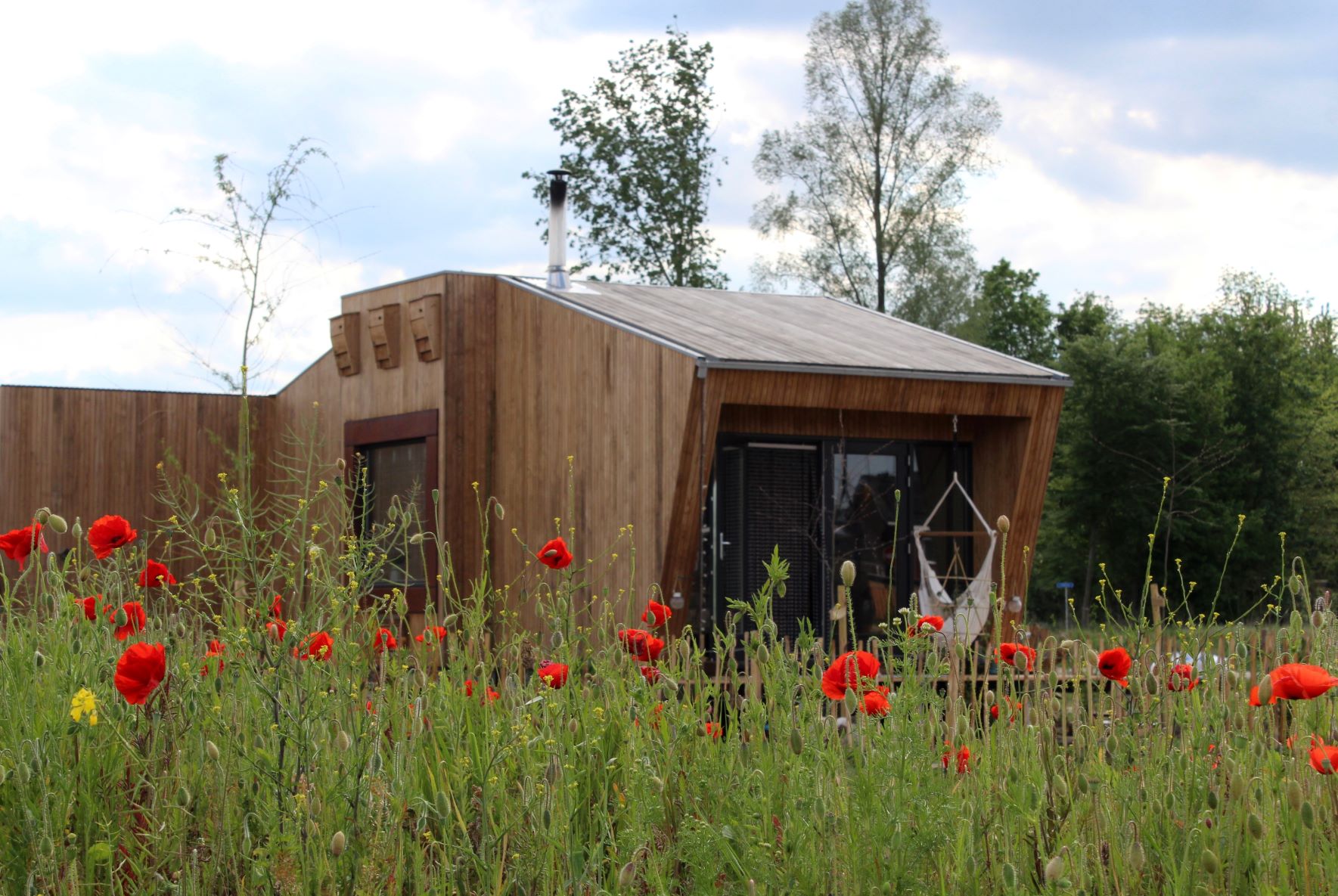
The first resident of Olstergaard
“It was beautiful, unique and special to be the first person living in Olstergaard,” Ingrid says. “I had a lot of space around me, received lovely cards from neighbors in the surrounding area, curious people came by, and I experienced many special encounters.”
Designing her own Tiny House and creating an edible garden
Ingrid designed her Tiny House with a clear vision: sustainable, ecological, partly off-grid and suitable for all stages of life. “I wanted a home where you could still live comfortably even if you needed a walker one day.”
For darker days she found smart solutions, such as a gravity-powered lamp, a kitchen scale with a winding mechanism, and appliances with rechargeable batteries that could be charged when the sun was shining. Due to rising construction costs and changes within the neighborhood, not all plans could be realized immediately. For example, the rainwater harvesting and purification system had to be postponed.
She also had ambitious plans for her garden. “My main goal was to create an edible garden. In addition to vegetables and fruit trees, I planted many edible wild plants and flowers. I also wanted a wild garden, with shelter areas for birds, hedgehogs, bats and insects.”
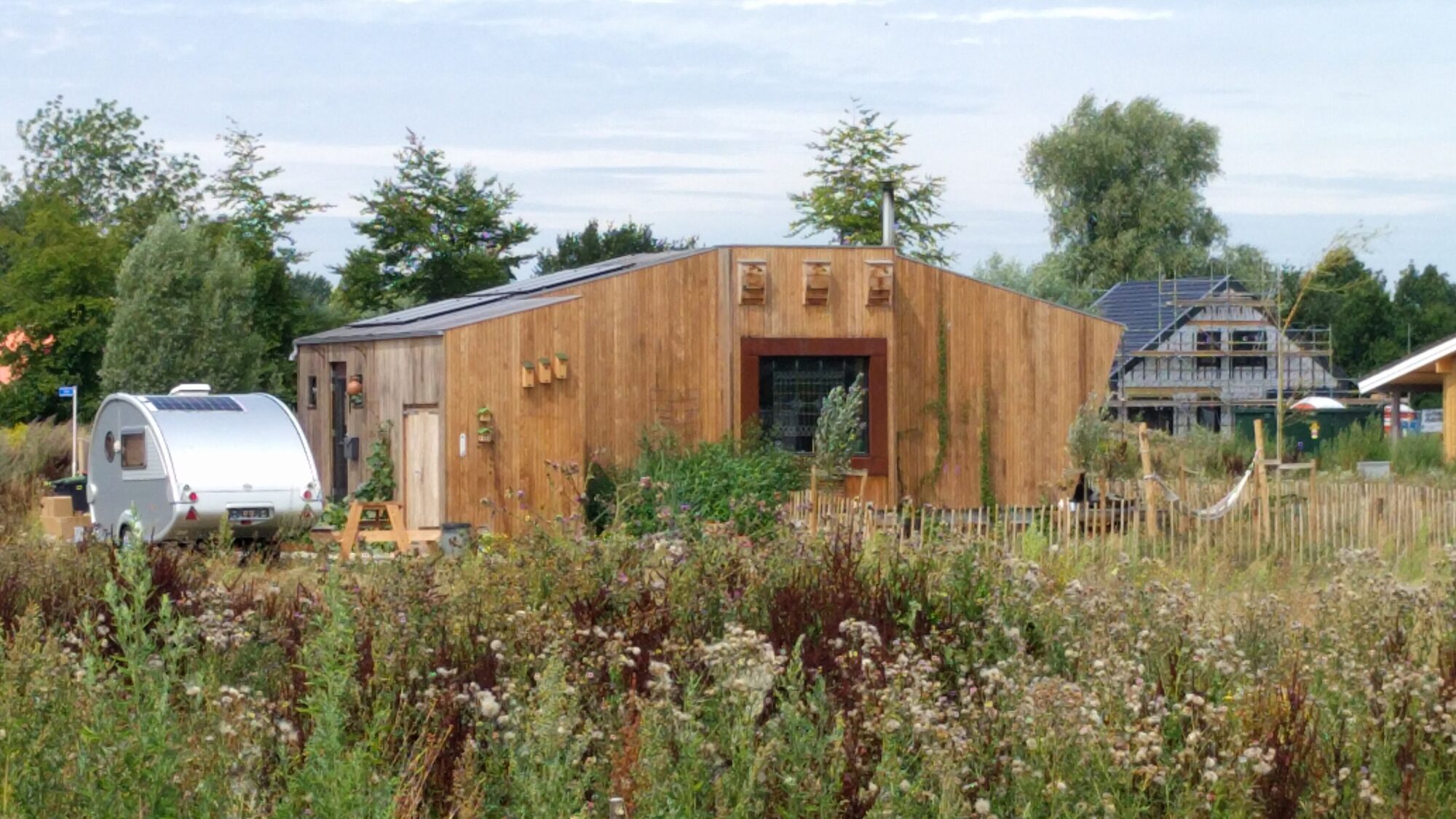
Life in Olstergaard
In total, Ingrid lived in Olstergaard for two and a half years. “It’s a neighborhood full of warm, kind people. There was a strong sense of community, helping each other and learning together. I wouldn’t have wanted to miss that experience.”
She fondly remembers early morning coffee moments with her neighbor — especially when her battery system had run out — and the many Friday afternoon gatherings. Joint DIY projects, searching for second-hand building materials together and neighborhood events such as Sinterklaas celebrations, Ribs & Blues, swap markets and the neighborhood festival made Olstergaard truly special.
Why she decided to leave
Despite all the positive experiences, Ingrid realized that Olstergaard would not be the place where she wanted to grow old. “The original plans focused on creating a neighborhood of the future: sustainable, ecological and developed together with the municipality. During implementation, that vision slowly faded.”
She saw how regulations, staff changes within the municipality and commercial interests increasingly influenced decisions. “The result was larger houses, more environmentally harmful building materials and less consistency in applying the original rules.”
Looking back, Ingrid also considers herself somewhat naïve. “You can’t really build a future-proof neighborhood using regulations that are based on past experiences. In the end, municipalities also focus on selling plots and building houses.”
After nearly two years, when her home became more and more surrounded by new construction, she realized it was time for change. “I came with a dream and had to admit that the final outcome was not something I wanted to accept.”
She took a break and traveled through Sweden for two months with her self-built camper van.


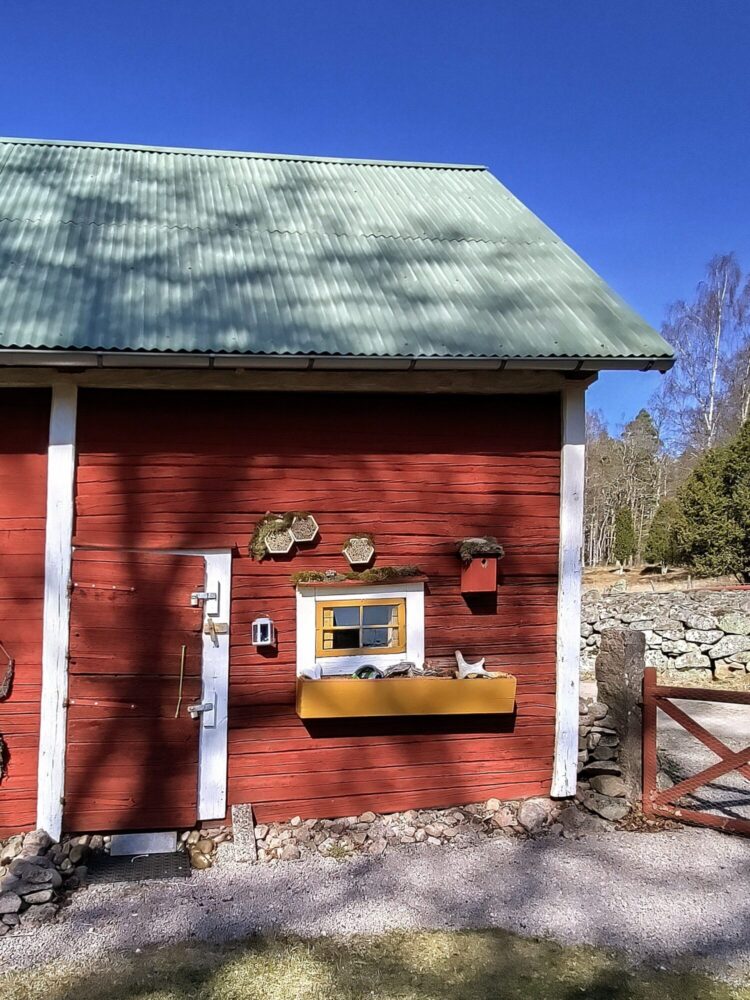
Falling in love with a 17th-century cottage
During that journey, Ingrid found the peace, space and freedom she had been longing for. “I fell in love with a small cottage surrounded by nature.”
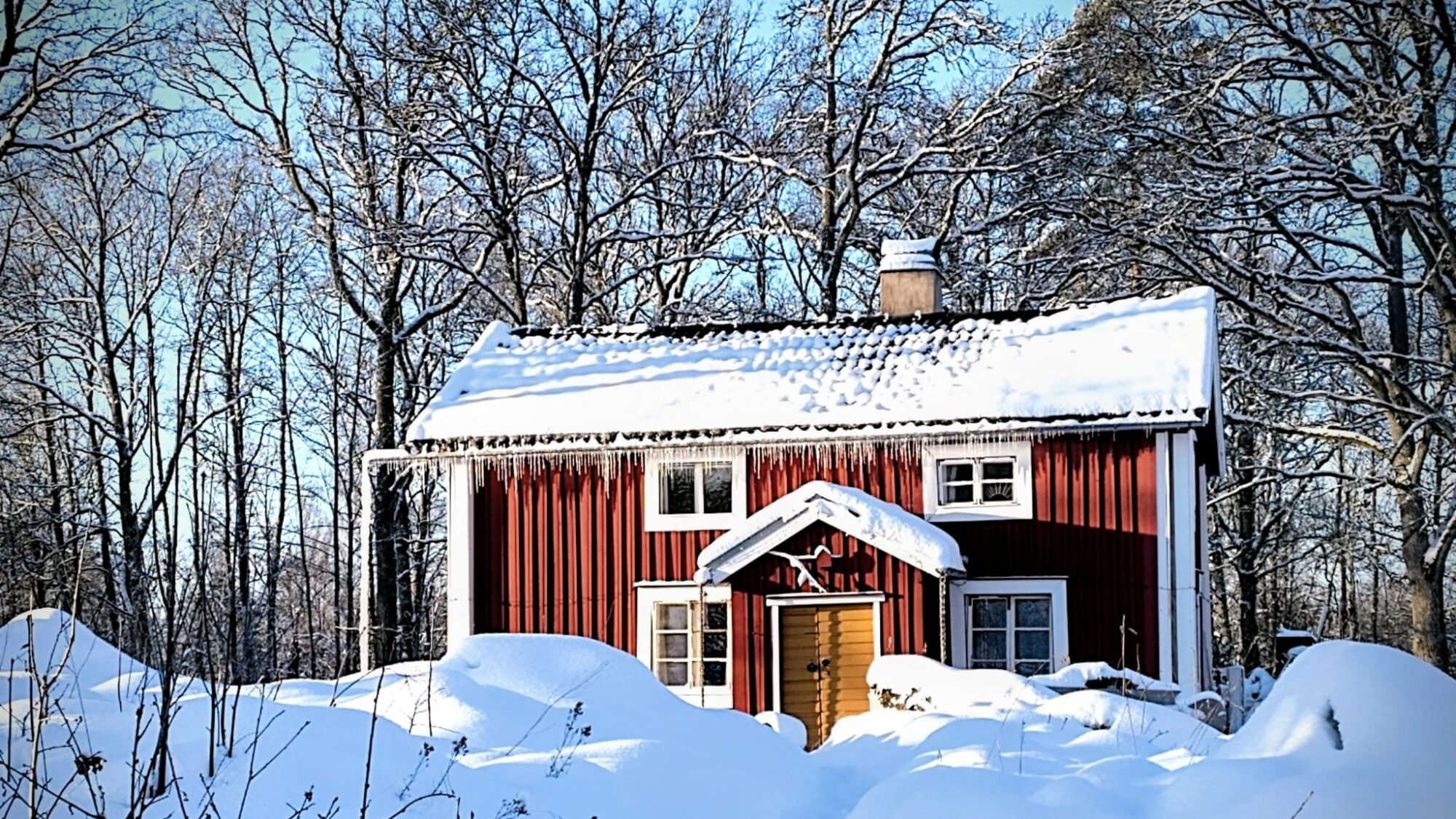
The house turned out to be very special: built in the late 17th century, made of log walls with moss between the gaps, windows without hinges held in place by nails, no sewage system and its own water source. Almost everything remained in its original state. The house had been empty for years — no Swedish buyer wanted it.
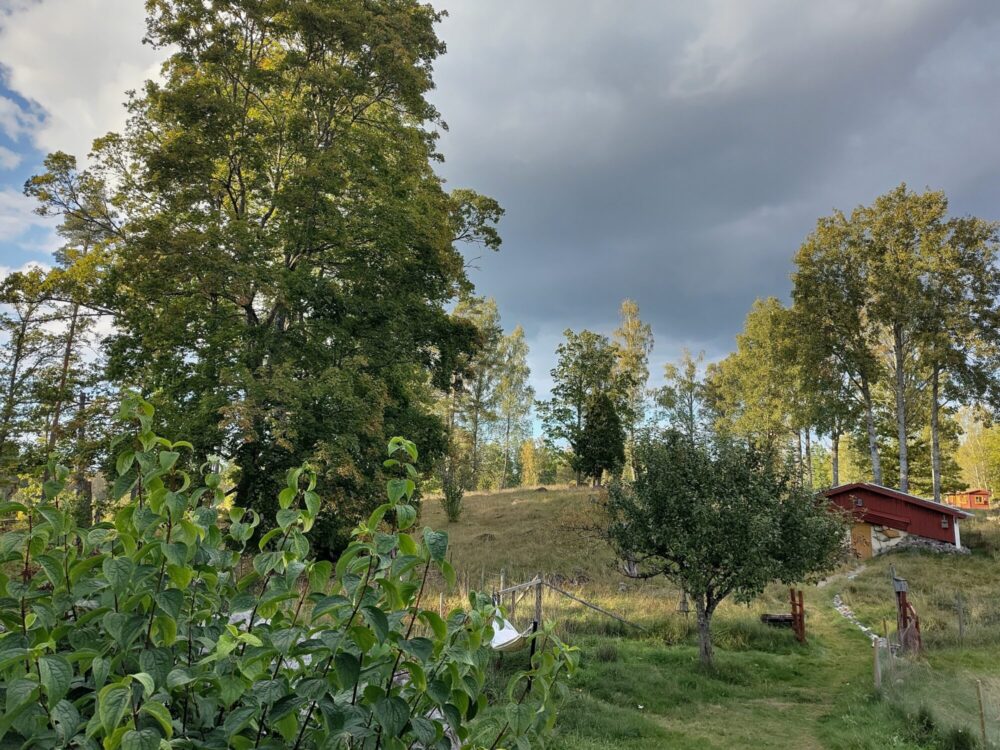
The property included three hectares of meadow, one hectare of forest, a root cellar, a large barn and a chicken enclosure. It’s not completely remote, but wonderfully private, located in a protected area with old stone walls surrounding the fields. “Here you’ll find deer, roe deer, foxes, moose and wild boar. There are countless bird species and no fewer than thirty types of butterflies. And nearby lakes offer beautiful places to swim and canoe.”
“I fell in love instantly.”
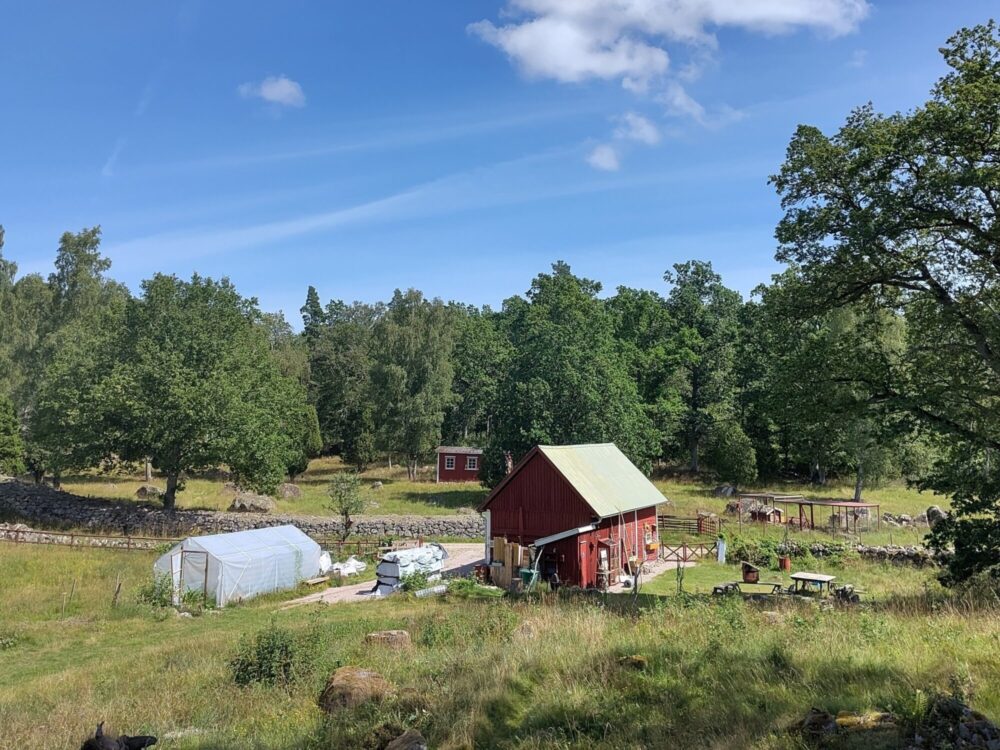
From Tiny House to a Swedish dream life
Back in the Netherlands, Ingrid carefully prepared her emigration. She then listed her Tiny House on TinyFindy. “It was sold within just a few days.” She drove to Sweden with a fully packed camper van and made an offer on ‘her’ cottage. It was accepted immediately.
Now, one and a half years later, Ingrid is busy renovating. “My goal is to preserve as much authenticity as possible, while adding modern comfort. For example, installing an indoor compost toilet, insulating with natural materials and adding double glazing on the inside while keeping the original exterior windows.”
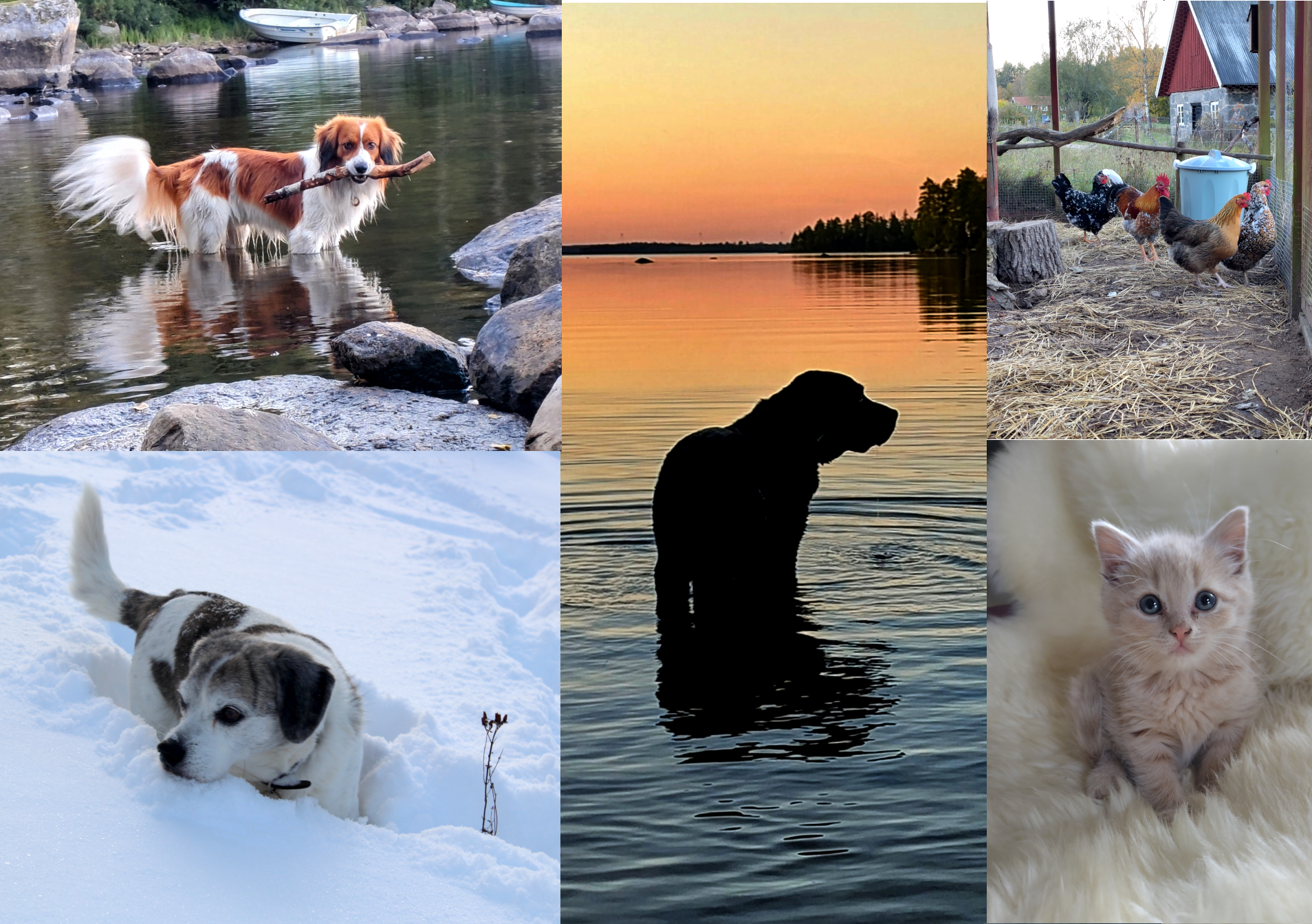
Here too, she is working towards an off-grid lifestyle. The vegetable garden is ready, chickens roam freely and wild foraging is possible everywhere. “And the best part: shops are not far away and there is plenty of culture in this region — museums, festivals, markets and concerts. For me, this truly is paradise.”
Ingrids advice
For people who want to live differently, Ingrid has clear advice: “You need patience, perseverance and courage. And be aware that alternative living on your own land in the Netherlands does not automatically mean cheap living. You still have to comply with building regulations and zoning plans, and that comes with costs.”
In Sweden, Tiny living is much easier according to Ingrid. “On any plot where a registered house already exists — even a ruin — you are allowed to place a Tiny House up to 30 m². There are exceptions, such as protected nature areas, but in general it’s much simpler.”
For anyone considering emigration: “Prepare yourself well. Every country has its own rules and surprises. There are many helpful websites with practical information — make use of them.”
Leave a Reply